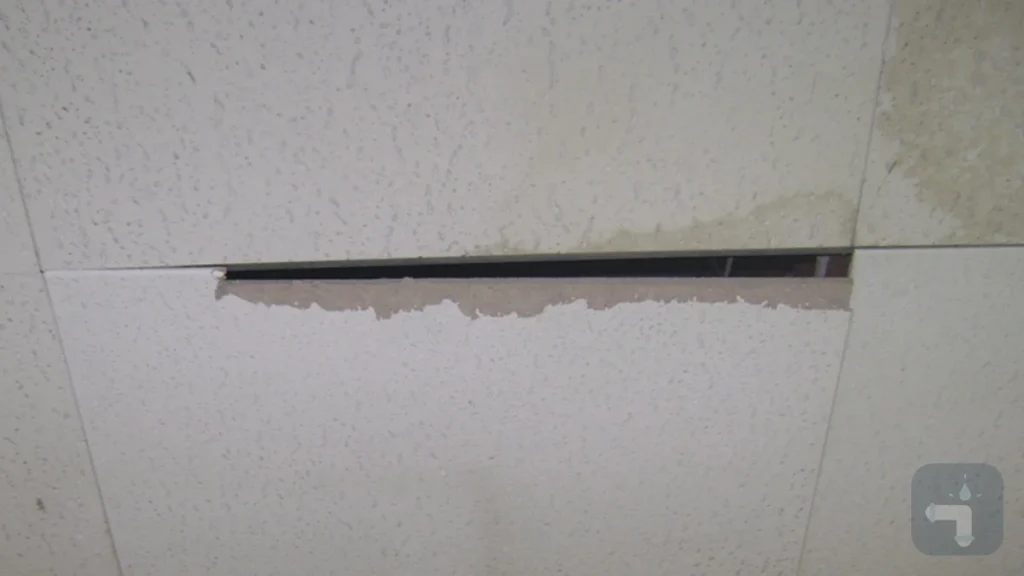
That brown ring on the ceiling is water that has already traveled — and it is telling you something is wet above it right now. The question that decides everything is whether the source is a pipe or the roof. Here is how Brighton homeowners can tell the difference before they call anyone.
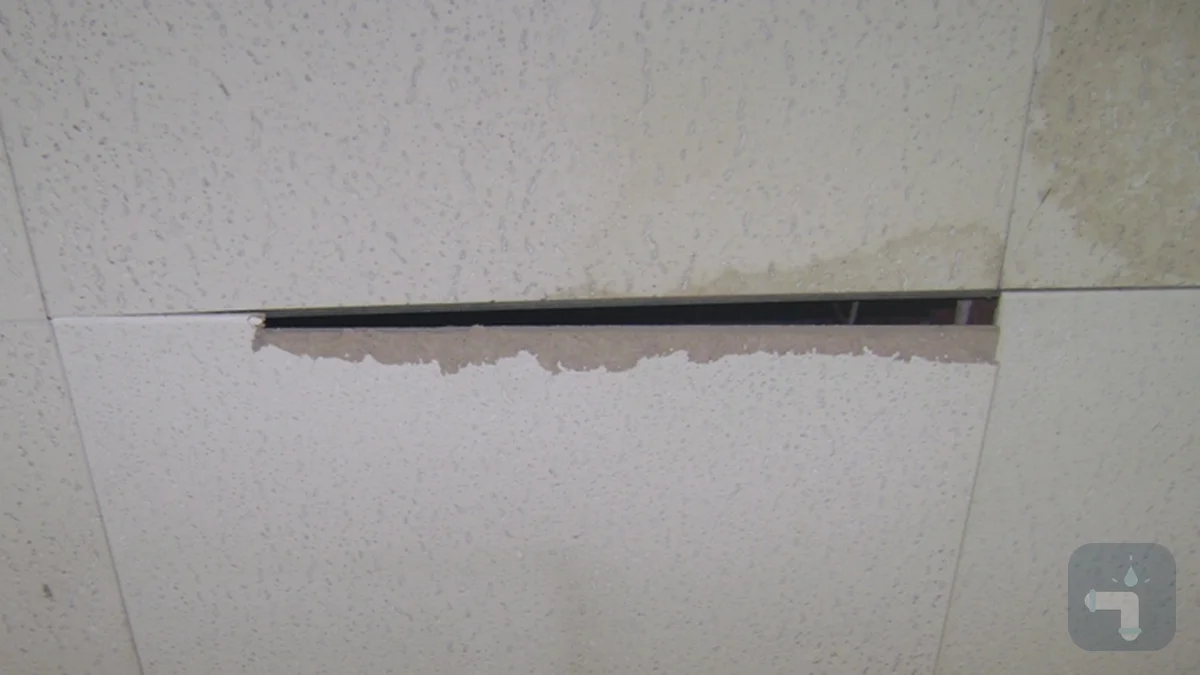
Bungle / CC BY-SA 3.0
What’s above it?
A bathroom, laundry, or known water line points to plumbing. Open attic or roof-only above points to the roof.
When does it grow?
Mark the edge with a pencil and date it. Growth on dry days = pipe. Growth only after rain = roof.
The fixture test
Run the upstairs shower/tub and flush. If dripping or stain growth follows within the hour, it is plumbing.
The meter test
Everything off for 30 minutes; if the meter moves, water is escaping somewhere — pipe confirmed as a live suspect.
| Clue | Points to pipe | Points to roof |
|---|---|---|
| Timing | Grows in dry weather; follows bathroom use | Appears after rain or snowmelt |
| Location | Below a bathroom, laundry, or pipe run | Below attic/roof only; near roof penetrations |
| Drip pattern | Steady, any time of day | Storm-driven, stops when things dry |
| Meter test | Meter moves with fixtures off | Meter still |
| Season | Any — spikes in freeze season | Rain season; winter ice-dam melts |
Wet drywall loses most of its strength, and a water-filled ceiling section can weigh far more than the fasteners holding it. Keep people and pets out from under a sagging section. If the source is a pipe and you can identify it — an upstairs bathroom supply or drain — shutting the water off stops the ceiling getting heavier while help comes. Our flooding damage control guide covers the documentation sequence if this turns into an insurance claim, and the cost guide shows typical repair ranges for the plumbing side.
Brighton Burst Pipe is a referral service. If the tests point to plumbing, call (720) 918-0220 and we will connect you with an independent local provider who can pinpoint the leak — usually without tearing the ceiling apart first, thanks to acoustic and moisture detection. If the tests point to the roof instead, we will tell you honestly that a roofer is your call, not us. The call costs nothing either way.
Watch the timing and check what is above it. Growth during dry weather or after upstairs bathroom use means plumbing; growth only after rain or snowmelt means the roof. The water meter test settles it: if the meter moves with all fixtures off, a pipe is leaking.
Yes, take it seriously. A stain means water has already soaked through the ceiling material — the leak may be slow, but it is filling the cavity and weakening the drywall. Slow leaks also feed mold inside the ceiling within 24 to 48 hours of wetting.
It can. Saturated drywall is heavy and weak, and a pocket of pooled water adds far more weight. A bulging, sagging ceiling should be treated as urgent: keep the area underneath clear and get the source stopped.
Not as a first move. Providers locate ceiling leaks with moisture meters and acoustic detection, usually opening the smallest possible area — and only after the source is confirmed. Random exploratory holes usually add repair cost without finding anything faster.
Usually one of three: a supply line to the tub, shower, or toilet; the drain or overflow; or failed caulk and grout letting shower water through the floor. The fixture test — running each one separately and watching — narrows it down quickly.
Commonly the resulting water damage is covered when the cause is a sudden, accidental pipe failure, while gradual leaks are commonly excluded. Document the stain’s timeline and the sudden event carefully — see our insurance guide for the full picture.
Call and we will connect you with an independent local provider in the Brighton area who can pinpoint the leak — the call itself costs nothing.
 Brighton Burst PipeBurst Pipe Repair · Brighton, CO