
Short version: usually the damage, not the pipe. This guide explains what a standard Colorado homeowners policy typically pays for after a burst pipe, what it leaves out, the rules that decide freezing claims, and the exact steps that protect your claim in the first 24 hours.
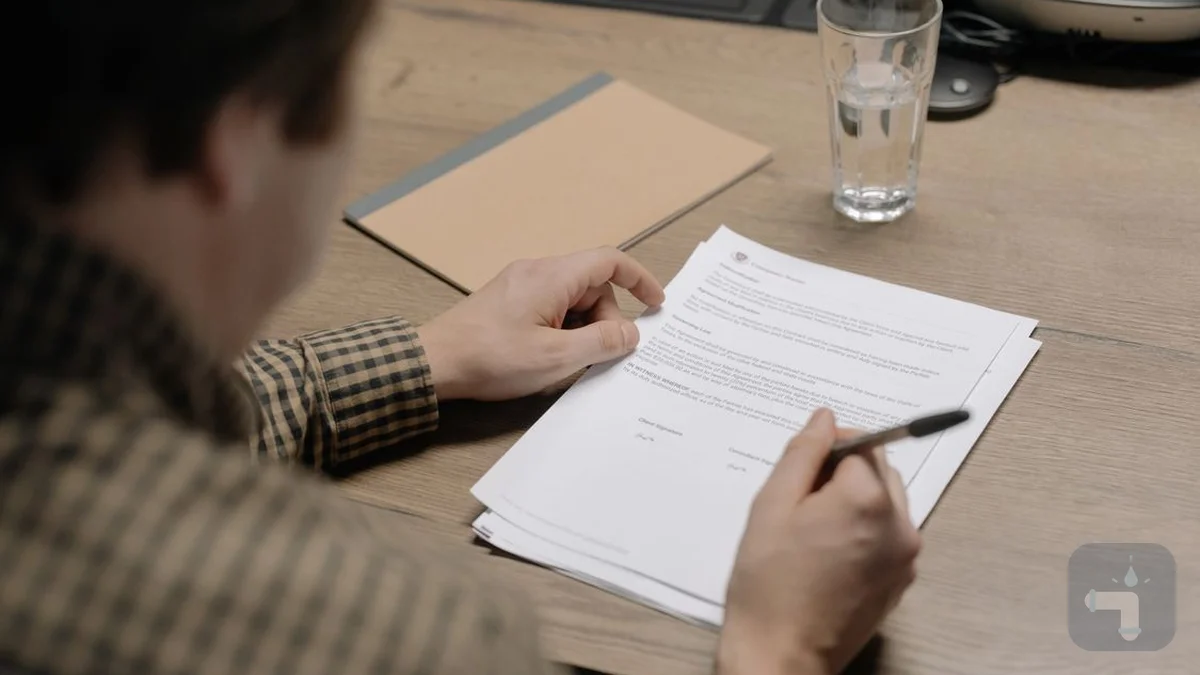
When a pipe bursts suddenly and accidentally, a standard policy commonly pays for the mess it leaves behind:
| Cost item after a burst | Commonly covered? | Why |
|---|---|---|
| Replacing the burst pipe section | Usually no | The failed part itself is a maintenance item under most policies. |
| Opening the wall to reach the pipe | Often yes | Tear-out needed to repair a covered loss is commonly included. |
| Soaked drywall, floors, cabinets | Usually yes | Resulting damage from a sudden, accidental discharge. |
| Ruined furniture and belongings | Usually yes | Personal property coverage, subject to limits and deductible. |
| Hotel while the home is unlivable | Often yes | Loss-of-use / additional living expense coverage. |
| Damage from a months-old slow leak | Usually no | Gradual damage and neglect are standard exclusions. |
| Sewer backup damage | Only with endorsement | Backup is a separate peril on most base policies. |
This is why two neighbors with identical damage can get opposite answers. It is also why your timeline matters: when you noticed it, what the weather was doing, and what you did next are all part of the claim file. The Insurance Information Institute reports that about 1 in 60 insured homes files a water-damage or freezing claim each year, with an average claim around $15,400 (2019–2023) — these are routine claims for insurers, and well-documented ones move fastest.
Freezing is Brighton’s most common burst cause, and it carries a condition many homeowners learn about too late: for a freezing claim to hold up, insurers generally expect you to have taken reasonable care — typically keeping the home heated. Red Cross guidance for cold weather is a thermostat at 55°F or higher, and insurers commonly look for exactly that standard when a pipe freezes in an empty or under-heated home.
For the hands-on side, see our pipe freezing emergency steps and the frozen pipe thawing and repair page.
Stop the water
Shut off the main valve. Insurers expect you to limit further damage — it is even a condition in most policies.
Document before cleanup
Narrated video walkthrough, photos of every room, the burst pipe, and each damaged item.
Call your insurer
Report the claim promptly and note the claim number and what they ask you to do next.
Keep everything
Damaged belongings and the cut-out pipe section stay until the insurer clears them. Save every receipt.
One caution that surprises people: do not throw away the failed pipe section. It is the physical evidence of why the pipe burst — freeze split versus corrosion matters to the sudden-and-accidental question. Our flooding damage control guide covers the full documentation routine, and the Brighton burst pipe repair cost guide shows the typical repair ranges insurers will be comparing your invoices against.
Run the simple math: if the covered damage is $1,200 and your deductible is $1,000, the claim pays $200 — and a water-damage claim on your record can affect premiums for years. If the damage is $8,000, the same deductible leaves $7,000 paid and filing is clearly worth it. There is no universal answer, but two honest rules of thumb: file when the loss is well beyond the deductible, and never let uncertainty about coverage stop you from stopping the water and documenting — those steps protect every option, including paying out of pocket.
Brighton Burst Pipe is a referral service, not an insurer or adjuster — we cannot tell you what your specific policy will pay. What we can do is connect you with an independent local provider at (720) 918-0220 who can stop the damage, repair the pipe, and document the work properly for whichever route you choose. The call costs nothing.
Usually the resulting water damage, not the pipe itself. A sudden, accidental burst is a classic covered event for the damage it causes — drywall, flooring, belongings — while the failed pipe section is treated as a maintenance cost. Your policy wording decides.
Commonly yes, if you took reasonable care — notably keeping the home heated (55°F is the widely used benchmark). A freeze in a home left unheated through a cold snap is where claims commonly get denied.
Often, yes. Many policies cover the tear-out needed to access a covered failure, even though the pipe repair itself is excluded. Keep the access and repair as separate lines on the invoice so the distinction is clear.
Gradual leaks are commonly excluded as long-term damage. If part of the damage is from a recent sudden worsening — for example, a weakened pipe finally letting go — document the timeline carefully and report it exactly as it happened; partial coverage outcomes exist, and honesty is what keeps the covered portion safe.
As soon as you reasonably can. Policies require prompt notice and expect you to prevent further damage — shutting off the water and mitigating is part of the deal. Document first, clean second, and report the same day whenever possible.
No. Keep the cut-out section, damaged belongings, and all receipts until your insurer says otherwise. The failed section is direct evidence of the cause of loss, which is central to the sudden-and-accidental determination.
Call and we will connect you with an independent local provider in the Brighton area who can stop the water, repair the pipe, and document everything properly for your claim — the call itself costs nothing.
 Brighton Burst PipeBurst Pipe Repair · Brighton, CO