 Brighton Burst PipeBurst Pipe Repair · Brighton, CO
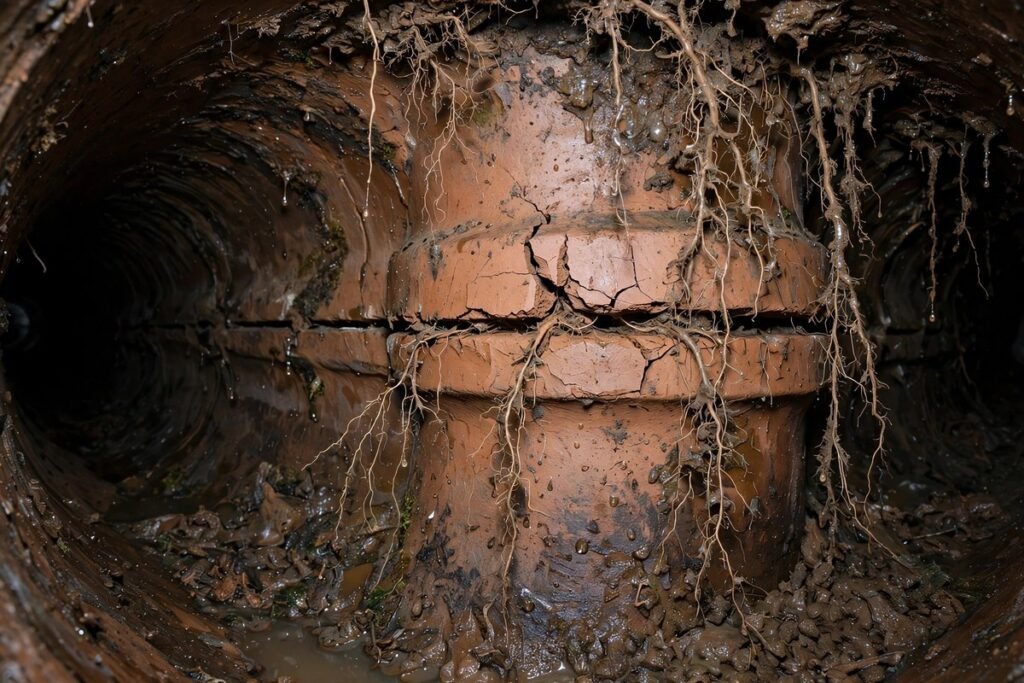
A tree in the garden and a sewer line underground are a bad combination. Tree roots are drawn to the water and nutrients inside a sewer pipe, and they will find the smallest crack or open joint to get in. Once inside, they grow, catch everything that passes, and slowly close the pipe until drains back up. In Brighton, where many homes still have clay or cast-iron sewer lines and large trees nearby, roots are the most common cause of repeat main drain blockages — and the most misunderstood.
This guide explains how tree roots get into a sewer line, the signs to look for, and the four options for dealing with them: jetting, treatment, repair, and lining. It uses only the figures published on this site. Brighton Burst Pipe is a referral service, not a plumbing company: when you call (720) 918-0220, we connect you with an independent local provider who can run a camera, show you what it found, and quote for the work.
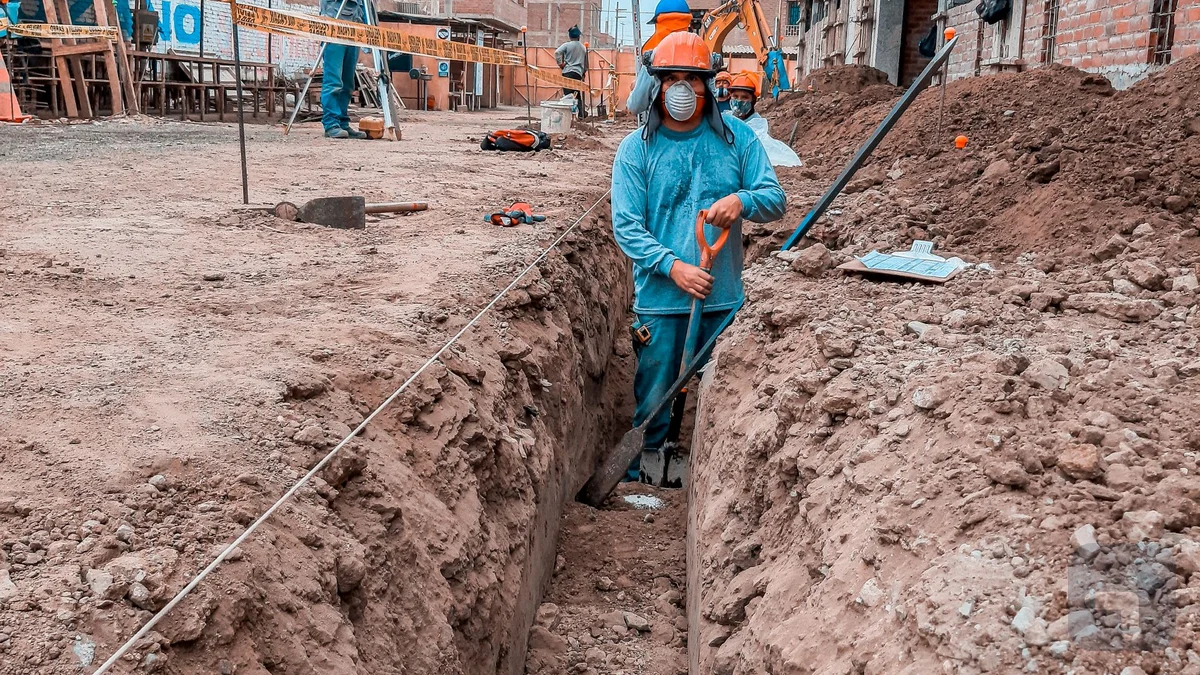
How do tree roots get into a sewer line?
Roots do not break into a sound pipe. They enter through a weakness that is already there: a crack, a joint that has opened, or a pipe that has shifted. Clay tile pipes, common in Brighton homes built in the 1960s and 1970s, are made in short sections joined together, and those joints open over time. Cast-iron pipes corrode from the inside and crack. Orangeburg pipe, made of tarred fibre, sags and deforms. Modern PVC pipe, with glued joints and a smooth inside, is much harder for roots to enter — which is why a replacement line is usually PVC.
Once a root finds its way in, it grows in the water and nutrients inside the pipe. Fine roots become a mat, the mat catches paper and debris, and the pipe narrows until water can barely pass. The tree does not need to be next to the pipe: roots can travel a long way underground to reach a sewer line, and a large tree 20 or 30 feet away can still be the cause. The season matters too — roots grow fastest in spring and summer, which is why a drain that was fine in winter can start blocking in summer.
What are the signs of tree roots in your sewer line?
- Repeat blockages in the main drain. The same drain blocks again and again, especially after snaking, and the blockage comes back faster each time.
- Several fixtures affected at once. The toilet gurgles when the washing machine runs, or several drains are slow at the same time — a sign the problem is in the main line, not in a single fixture.
- Water coming up in the lowest drain. The basement floor drain or a ground-floor shower is the first to show a main line blockage.
- A lush patch in the garden. A patch of grass that is greener and faster-growing than the rest, over the line of the sewer, can mean the pipe is leaking and feeding the roots.
- A soggy patch that never dries. Water leaking from a root-damaged pipe keeps the ground wet, even in dry weather.
- A bad smell that will not go away. A cracked pipe lets sewer gas out, and the smell is often strongest near the line.
None of those signs proves roots on its own — only a camera inspection does that. A camera inspection, listed on this site at $100–$350 nationally, shows the inside of the pipe on a screen: the roots, where they are, how far they have grown, and whether the pipe is cracked or collapsed as well. Ask to see the footage, and ask for the distance and depth of each problem, so you have a record if repair or replacement is quoted later.
Why does snaking not fix a root problem?
Snaking cuts roots back, but it does not remove them, and it does not close the opening they came through. The roots grow back — usually faster than before, because cutting them encourages new growth — and the joint is still open. A single fixture snaking typically costs $100–$275 nationally, and a main sewer drain cleaning $250–$500, according to the figures published on this site. Paying for either of those three times in a year can cost more than one camera inspection and one proper fix, and it leaves the pipe in the same condition it was in.
That does not mean snaking is useless. It is a good first step to restore flow, so a camera can be run and the problem can be seen properly. But snaking on its own, repeated without a camera, is a sign that the cause has not been found. If your drain has been snaked more than twice for the same problem, ask for a camera inspection before the next clear.
What is hydro jetting, and does it remove roots?
Hydro jetting uses high-pressure water to scour the inside of the pipe, cutting through roots and stripping grease and scale from the pipe walls. At $350–$800 nationally, according to the figures on this site, it costs more than snaking, and it does a more thorough job — a jetted pipe is cleaner and flows better than a snaked one. But jetting, like snaking, does not close the opening the roots came through. The roots will grow back, even if it takes longer than after snaking.
Jetting should only be done after a camera check, because high-pressure water in a cracked or collapsed pipe can make things worse. A provider who jets without checking the pipe is taking a risk with your drain. Jetting is the right choice when the pipe is sound enough for it, the roots are the main problem, and you want the pipe cleaned properly — but it is a treatment, not a cure, and it will need repeating unless the pipe is repaired or lined.
What is root treatment, and does it work?
Root treatment usually means a chemical — often a copper-based or foaming product — put into the drain to kill the roots inside the pipe. It can clear roots and slow their regrowth, and it is sometimes used after jetting to keep the pipe clear for longer. The site publishes no figure for root treatment, so the cost drivers are the product, how it is applied, and whether a provider applies it as part of a jetting or camera visit — not a separate figure invented here.
Treatment has limits, and they should be understood before you pay for it. It kills the roots inside the pipe, but it does not close the crack or joint they came through, and it does not repair a damaged pipe. It can also affect the tree itself if it is used carelessly, and it should not be used as a substitute for finding out how bad the pipe is. A provider should explain what product is being used, how it is applied, and what it will and will not do — and treatment should follow a camera inspection, not replace one.
When is repair or lining the right choice?
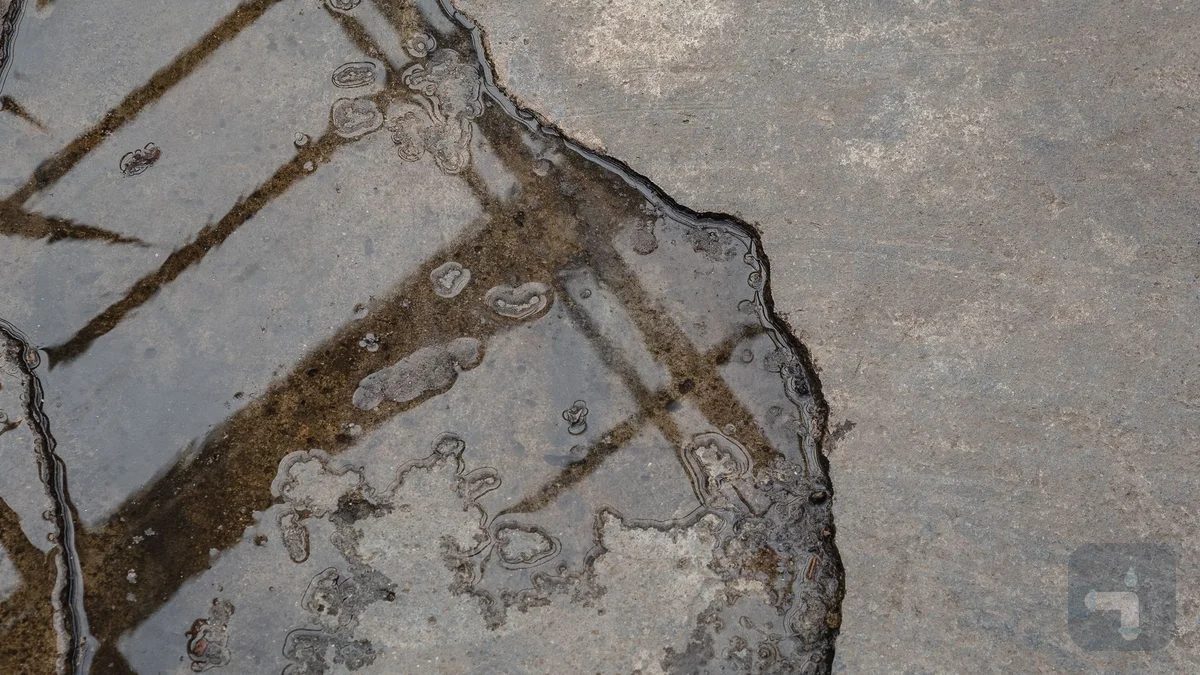
Repair or lining is the right choice when the pipe itself is damaged, or when roots keep coming back through the same joints. A spot repair, listed on this site at $1,000–$4,000 nationally, fixes one damaged section — a crack, a joint that has separated, or a short section invaded by roots. It is the right choice when the rest of the line is in good condition and the camera shows a single, clear problem.
Lining inserts a new pipe inside the old one, sealing the cracks and joints that let roots in, without digging a trench along the whole line. Trenchless replacement, including lining and pipe bursting, is listed at $60–$250 per foot nationally, and a full replacement at $3,000–$25,000. Lining is the right choice when the pipe is damaged along a longer length, or when roots are entering at many joints, but the pipe is still sound enough to line — a fully collapsed pipe, or one with a severe sag, may not be suitable. A provider should explain which method they are quoting, why it suits your line, and what would make them change to a traditional dig.
Between the options, the decision comes down to the camera. If the camera shows roots at one joint and a sound pipe elsewhere, a spot repair may be enough. If it shows roots at every joint, or a pipe that is failing along its length, lining or replacement is the better use of the money. If it shows a collapsed section, no clearing or lining method will fix it — the section needs to be dug up and replaced. Ask for the footage and a written description, with the distance and depth of each problem, before you agree to any of them.
How can you prevent tree roots in your sewer line?
- Do not plant large trees over or near the sewer line. If you are planting, choose smaller species and plant them well away from the line. Ask a provider where the line runs before you plant.
- Have the line inspected by camera if drains have started to slow, or if you are buying or selling the house. A camera inspection, at $100–$350, shows the condition of the line before it becomes an emergency.
- Keep the line clean. A scheduled main drain clean, at $250–$500 for a main sewer drain cleaning, is cheaper than an emergency call when sewage is backing up.
- Fix small problems early. A crack or an open joint that is repaired early is a spot repair at $1,000–$4,000. Left alone, it becomes a root problem, then a backup, then a replacement.
- Consider a root barrier if a large tree cannot be moved. A barrier can redirect roots away from the line, but it should be planned with a provider who knows where the line runs.
Frequently Asked Questions
How do I know if tree roots are in my sewer line?
Repeat main drain blockages, several fixtures affected at once, water coming up in the lowest drain, a lush or soggy patch over the line, or a smell that will not go away are all signs. Only a camera inspection, listed at $100–$350, proves it — the camera shows the roots inside the pipe.
Will snaking remove tree roots?
Snaking cuts roots back, but it does not remove them and it does not close the opening they came through, so they grow back. A main sewer drain cleaning typically costs $250–$500 nationally, and jetting $350–$800 — both are treatments, not cures, unless the pipe is repaired or lined.
Is hydro jetting safe for a root-damaged pipe?
Jetting can damage a cracked or collapsed pipe, which is why a provider should run a camera first to check the condition of the pipe. Jetting is the right choice when the pipe is sound enough for it and the roots are the main problem.
How much does it cost to fix tree roots in a sewer line?
It depends on the fix. A camera inspection is $100–$350, a main drain cleaning $250–$500, jetting $350–$800, a spot repair $1,000–$4,000, and a full replacement $3,000–$25,000, with trenchless work at $60–$250 per foot — all national ranges published on this site.
Should I remove the tree?
Not necessarily. Removing a tree is a big decision, and it does not repair the pipe — the crack or joint is still open, and other roots can enter. Repairing or lining the pipe, and planting future trees away from the line, is usually the better approach. Ask a provider to show you the camera footage before you decide.
Can tree roots cause a sewer backup?
Yes. Roots narrow the pipe until water can no longer pass, and sewage backs up into the lowest drain in the house. If sewage is backing up, stop using water and call for help straight away.
Worried about tree roots in Brighton?
If your main drain keeps blocking, or you have large trees near your sewer line, do not pay for another clear without finding out why. Call (720) 918-0220 and we will connect you with an independent local provider in the Brighton area who can run a camera, show you what it found, and explain whether jetting, treatment, repair, or lining is the right choice — with a clear quote before work starts. Tell them the age of your home and whether you have large trees near the line — that helps them bring the right equipment.