 Brighton Burst PipeBurst Pipe Repair · Brighton, CO

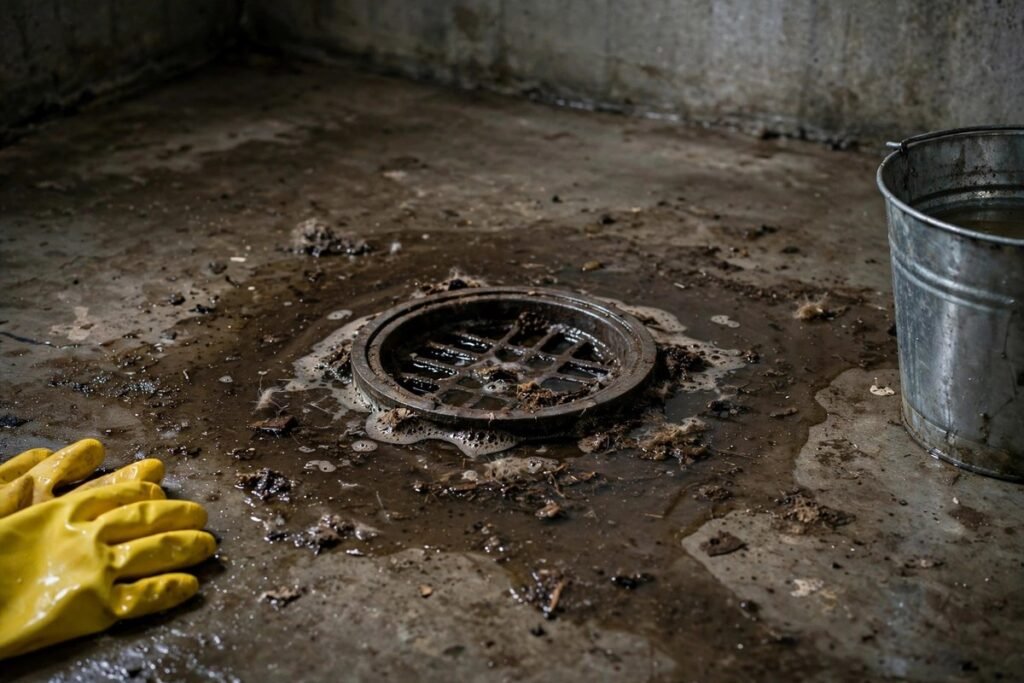
There are few things more unpleasant than sewage coming up into your home. It usually starts in the lowest drain — a basement floor drain, a ground-floor shower, or a toilet — and it can spread fast if water keeps running. What you do in the first few minutes matters more than anything else: stop the water, keep people away from it, and call for help. This guide explains the first steps that limit the damage, what causes a sewer backup in a Brighton home, and what happens next.
Brighton Burst Pipe is a referral service, not a plumbing company: when you call (720) 918-0220, we connect you with an independent local provider who can attend, stop the backup, find the cause, and quote for the clearing or repair. If sewage is backing up now, stop using water and call straight away — the rest of this guide will still be here when the water is off.
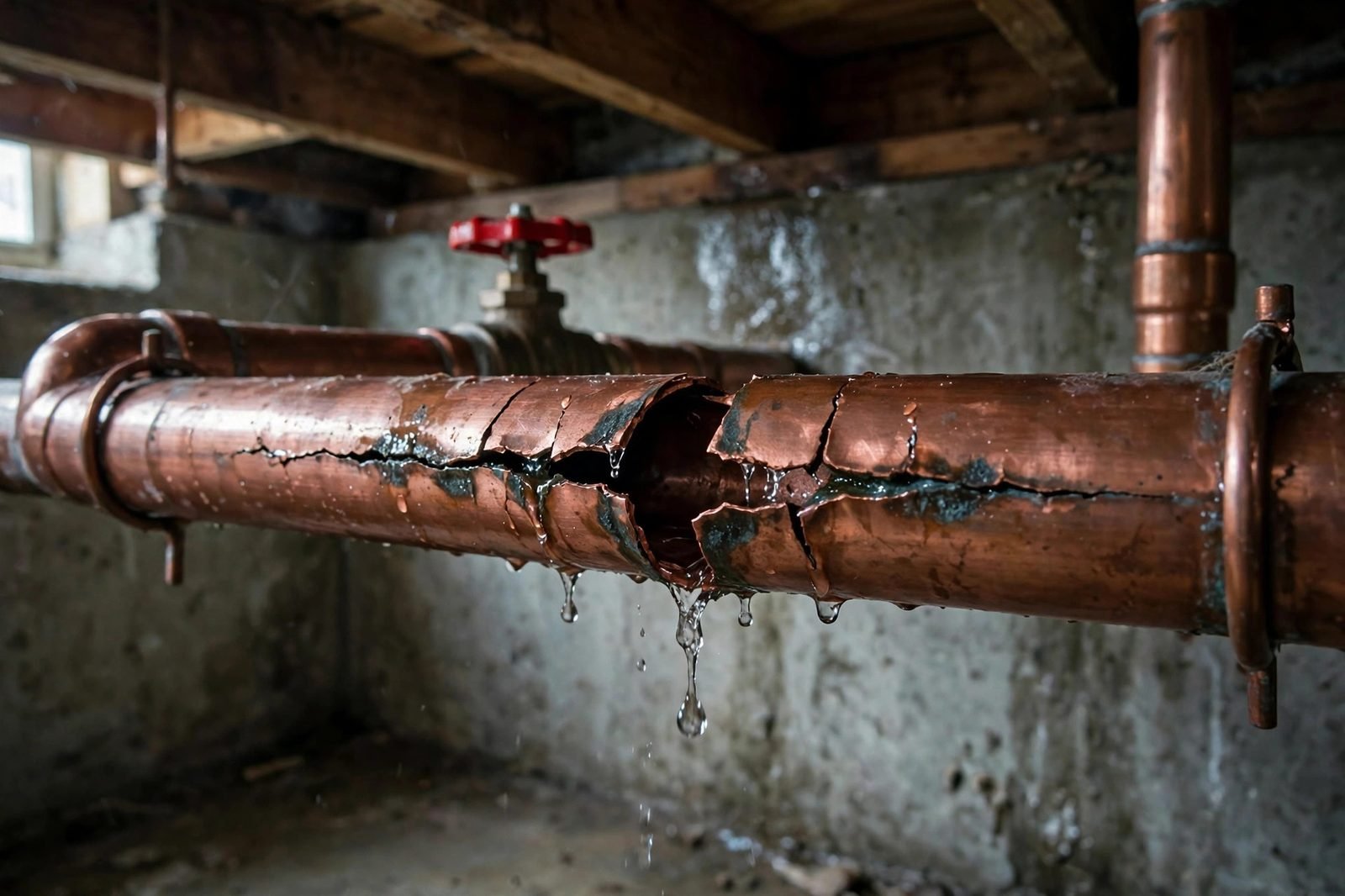
What should you do first when sewage backs up?
- Stop using water. No showers, no baths, no washing machine, no dishwasher, and no flushing. Every litre you run feeds the backup.
- Keep people and pets away from the sewage. Sewage carries bacteria and can make people ill. Do not let children or pets walk through it, and do not touch it with bare hands.
- Turn off the water if you need to. If you cannot stop the backup by stopping water use, turn off the main water supply to the house.
- Do not use electrical appliances standing in water, and do not touch switches or sockets near the water.
- Open a window if you can do so safely, and move rugs, boxes, and anything that can be damaged out of the way — wearing gloves and boots if you have them.
- Call for help straight away, and tell the provider which drains are affected, how fast the water is rising, and whether it has happened before.
Do not keep flushing the toilet to see whether it clears, and do not run taps to test the drain. Do not use a chemical drain cleaner — it will not clear a sewer backup, and it makes the drain unsafe for the provider who has to work on it. And do not try to clear a main sewer blockage yourself with a hired machine if you have not done it before: a cable can get stuck, damage a pipe, or push the blockage further in.
What causes a sewer backup in a Brighton home?
A backup means water cannot get away from the house, so it comes back up through the lowest drain. The cause is usually in the main drain or the sewer line, not in a single fixture. If only one sink is slow, the problem is local. If several fixtures are affected, or sewage is coming up in the basement, the main drain is the place to look.
- A blocked main drain. Grease, wipes, sanitary products, and debris build up in the main drain until water can no longer pass. A main sewer drain cleaning typically costs $250–$500 nationally, according to the figures published on this site.
- Tree roots. Roots find the smallest crack or open joint in a clay or cast-iron sewer line, grow inside it, and catch everything that passes. Many Brighton homes built in the 1960s and 1970s still have clay or cast-iron lines, and roots are the most common cause of repeat main drain blockages in those homes.
- A damaged or collapsed pipe. A cracked pipe, a collapsed section, or a belly where water sits instead of flowing will keep backing up whatever clearing method is used. A spot repair is listed at $1,000–$4,000 nationally, and a full replacement at $3,000–$25,000.
- Heavy rain or a spring thaw. In Brighton, a spring thaw or heavy rain can overload the sewer system, and water can back up into homes at the lowest point. Sump pumps and backwater valves can help, and they are covered in other guides on this site.
- A problem in the public sewer. Sometimes the blockage is in the main sewer in the street, not in your lateral. A provider can tell you, from the camera footage and the distance, where your responsibility ends — the homeowner usually owns the lateral from the house to the public main, and the city or utility usually owns the main itself.
How can you tell a backup from a simple blockage?
A simple blockage is usually in one fixture: a sink that drains slowly, a shower that will not empty, or a toilet that will not flush properly. A backup is different: water comes up, not just fails to go down. The signs are water or sewage in the lowest drain, several fixtures affected at the same time, a toilet that gurgles when the washing machine runs, or a bad smell that will not go away. If you see any of those, stop using water and call for help — do not wait to see whether it clears on its own, because a backup rarely does, and the longer it runs, the more clean-up is needed.
Water damage clean-up after a backup is listed on this site at $3–$7.50 per square foot, and a burst pipe repair at $200–$3,000, averaging around $500 — but a sewer backup is not just water damage. Sewage needs proper cleaning and disinfecting, and flooring, drywall, and belongings that have been soaked may need to be removed. The sooner the water is stopped, the less there is to clean up.
What will a provider do when they arrive?
A provider’s first job is to stop the backup and restore flow, usually by clearing the main drain. A main sewer drain cleaning typically costs $250–$500 nationally, according to the figures published on this site. If the drain will not clear, or if it has blocked before, the next step is a camera inspection, listed at $100–$350, to see inside the pipe and find the cause — roots, a crack, a collapse, or a belly where water sits.
- Stop the backup by clearing the main drain and restoring flow.
- Run a camera to find the cause, and show you the footage.
- Explain the fix — snaking, jetting at $350–$800, a spot repair at $1,000–$4,000, or a full replacement at $3,000–$25,000 — with the reasoning, not just a price.
- Test the drain by running water through it, to confirm it is flowing freely before leaving.
- Advise on prevention, including whether a backwater valve would help your home.
Ask for the camera footage and a written description of what was found, with the distance and depth of any problem. You will need both if repair or replacement is quoted later, and a second provider can only give you a useful opinion if they can see what the first one saw. Ask what happens if the backup comes back within a few weeks, and ask for the diagnosis, the method, and the price to be listed separately.
How should you clean up after a sewer backup?
Cleaning up after a backup is not the same as drying out after a clean-water leak. Sewage carries bacteria, and anything it has soaked needs proper cleaning, disinfecting, or removal. Wear gloves and boots, keep children and pets out of the area, and do not use a household vacuum on sewage. Hard surfaces can usually be cleaned and disinfected; soft furnishings, rugs, and drywall that have been soaked often need to be removed, because they cannot be disinfected reliably.
- Remove standing water once the backup has stopped, and dry the area as soon as you can.
- Disinfect hard surfaces that came into contact with sewage.
- Remove soaked soft materials — rugs, cardboard, and drywall that cannot be disinfected.
- Ventilate the area and dry it thoroughly, to prevent mould.
- Take photos of the damage for your records and for any insurance claim, before you start clearing up.
- Tell the provider how much was affected, so the clean-up can be planned properly.
Water damage clean-up is listed on this site at $3–$7.50 per square foot, and that figure covers clean water damage — a sewer backup needs more thorough cleaning, and the provider or clean-up service should explain what is included. If you are not sure what is safe to keep and what should go, ask: keeping a soaked rug is not worth the health risk.
How can you prevent the next sewer backup?
- Keep wipes, sanitary products, and grease out of the drains. Only toilet paper and human waste should be flushed, and grease should go in the bin, not down the sink.
- Have the main drain cleaned before it blocks, if your home has a history of backups. A scheduled clean is cheaper and cleaner than an emergency call.
- Ask about a backwater valve. A backwater valve lets water flow out of the house but stops it flowing back in, and it can protect a home that has backed up before — especially a home at the lowest point, or one affected by heavy rain or a spring thaw.
- Watch for tree roots. If you have large trees near the sewer line, ask for a camera inspection — roots grow back after snaking, and only a camera shows how bad the problem is.
- Know where your cleanout is. A cleanout gives a provider quick access to the main drain. If you do not know where yours is, ask the provider to show you.
- Have the line inspected by camera if drains have started to slow, or if you are buying or selling the house. A camera inspection, at $100–$350, shows the condition of the line before it becomes an emergency.
Frequently Asked Questions
What should I do first if sewage backs up into my home?
Stop using water, keep people and pets away from the sewage, turn off the main water supply if you need to, and call for help straight away. Do not keep flushing or running taps, and do not use a chemical drain cleaner.
Is a sewer backup dangerous?
Yes. Sewage carries bacteria and can make people ill, so keep people and pets away from it, wear gloves and boots if you have to be near it, and have the area properly cleaned and disinfected afterwards.
What causes a sewer backup?
Usually a blocked main drain, tree roots, a damaged or collapsed pipe, heavy rain or a spring thaw overloading the system, or a problem in the public sewer. A camera inspection, listed at $100–$350, shows which one it is.
How much does it cost to clear a sewer backup?
A main sewer drain cleaning typically costs $250–$500 nationally, according to the figures published on this site. If the pipe is damaged, a spot repair is listed at $1,000–$4,000 and a full replacement at $3,000–$25,000. Water damage clean-up is listed at $3–$7.50 per square foot.
Can I prevent a sewer backup?
Keeping wipes, sanitary products, and grease out of the drains helps, and having the main drain cleaned before it blocks helps too. A backwater valve can stop sewage flowing back into a home that has backed up before. Ask a provider whether one would suit your home.
Who is responsible for the sewer line?
In most cases the homeowner owns and is responsible for the lateral — the pipe from the house to the public sewer main. The city or utility usually owns the main itself. A provider can tell you, from the camera footage and the distance, where your responsibility ends.
Sewer backing up in Brighton?
If sewage is coming up into your home, do not wait and hope it clears — stop using water and call (720) 918-0220 now, and we will connect you with an independent local provider in the Brighton area who can stop the backup, find the cause, and quote for the clearing or repair. Tell them which drains are affected, how fast the water is rising, and whether it has happened before — that helps them bring the right equipment and give you a clear price.