 Brighton Burst PipeBurst Pipe Repair · Brighton, CO

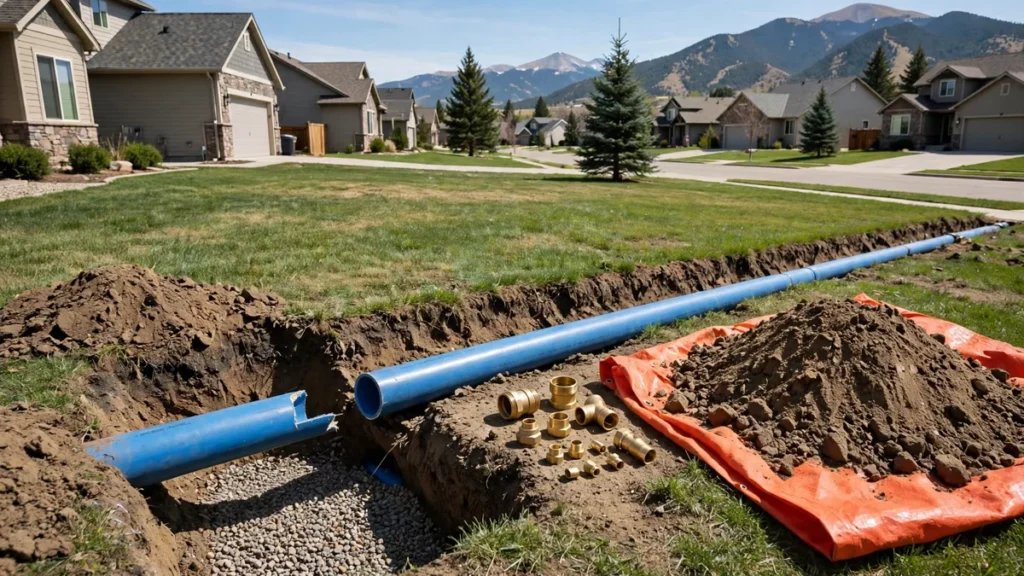
There is no plumbing bill in Brighton quite like a sewer line replacement. It is the pipe you never see, under the garden or the driveway, carrying everything away from your home — and when it fails, the signs are hard to ignore: drains that keep blocking, sewage backing up into the lowest bathroom, a soggy patch in the garden that never dries, or a smell that will not go away. Before you agree to dig up your garden, it helps to know what replacement should cost, what makes one job cost far more than another, and when a repair will do instead.
This guide covers sewer line replacement costs in Brighton, CO, using only the figures published on this site. It explains the difference between a spot repair, a traditional replacement, and a trenchless replacement, the Brighton factors — clay and cast-iron pipes, tree roots, frost depth, and access — that change the price, and the questions to ask before anyone brings a digger to your home. Brighton Burst Pipe is a referral service, not a plumbing company: when you call (720) 918-0220, we connect you with an independent local provider who can inspect the line, show you what a camera found, and quote for the work.
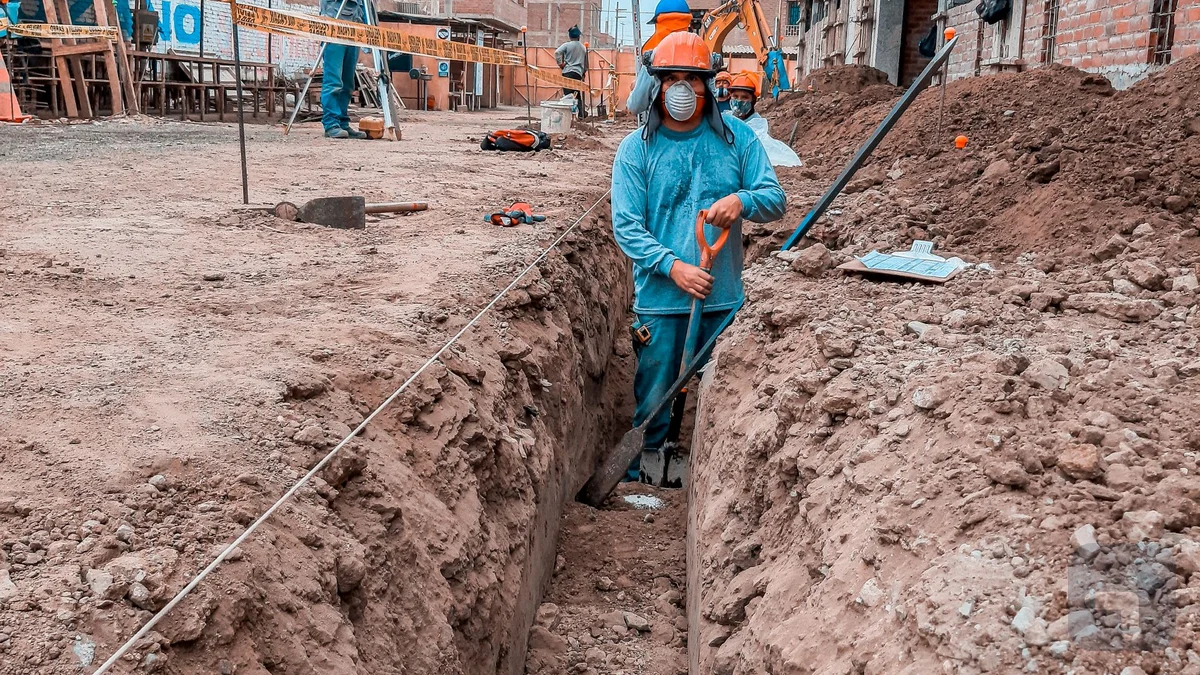
How much does sewer line replacement cost in Brighton, CO?
The short answer is that a full sewer line replacement in Brighton typically costs $3,000–$25,000 nationally, according to the figures published on this site. A spot repair typically costs $1,000–$4,000, and trenchless replacement typically costs $60–$250 per foot. That is a very wide range, and it is wide for a good reason: a short, shallow line in soft soil with easy access is a very different job from a long, deep line under a driveway, with tree roots and a collapsed section.
| Job | Typical range published on this site |
| Camera inspection | $100–$350 nationally |
| Main sewer drain cleaning | $250–$500 nationally |
| Hydro jetting | $350–$800 nationally |
| Spot repair | $1,000–$4,000 nationally |
| Trenchless replacement | $60–$250 per foot nationally |
| Full replacement | $3,000–$25,000 nationally |
| Emergency call-out | $100–$300 |
| Labour | $100–$350 per hour |
Only a provider who has inspected your line can give you a final price. A quote given over the phone, without a camera inspection, is a guess — and a guess on a job of this size is not good enough. Ask for a camera inspection first, listed at $100–$350, and ask to see the footage. The camera shows the length of the line, the material, the depth, and exactly where the problem is. Without it, you cannot tell whether you need a spot repair, a trenchless replacement, or a full dig.
What affects the price of a sewer line replacement?
Length is the first driver. A sewer line is priced by the foot as well as by the job, and a line that runs 60 feet to the street costs more to replace than one that runs 20 feet. Trenchless replacement is listed on this site at $60–$250 per foot, so length alone can move the price by thousands of dollars. Depth matters too: in Brighton, pipes must be buried below the frost line, and a deep line needs a deeper trench, more digging, and more care.
- Length and depth of the line. Longer and deeper lines need more digging, more pipe, and more time. Labour on this site is listed at $100–$350 per hour.
- Pipe material. Many Brighton homes built in the 1960s and 1970s still have clay tile or Orangeburg pipe, and older homes may have cast iron. Clay cracks and lets roots in; Orangeburg sags and collapses; cast iron corrodes from the inside. Modern PVC is the usual replacement, and it is smoother, stronger, and less inviting to roots.
- Method: traditional or trenchless. A traditional replacement digs a trench along the whole line. A trenchless replacement — pipe bursting or lining — needs only small access pits at each end. Trenchless usually costs more per foot, at $60–$250 per foot, but it can save the cost of restoring a garden, a driveway, or a patio.
- What is above the line. A line under a lawn is cheaper to restore than a line under a concrete driveway, a patio, or a mature tree. Restoration — turf, concrete, paving, and landscaping — is a real part of the bill, and it should be in the quote.
- Access and permits. A narrow side passage, a steep slope, or a line that runs under a public pavement adds time and complexity. Permits and inspections are part of the job, and the provider should explain what is included.
- What else is found. A camera may find one collapsed section, or it may find a line that is in poor condition along its whole length. It may also find that the problem is not the line at all, but a blocked main drain that can be cleaned for $250–$500.
Who is responsible matters too. In most cases the homeowner owns and is responsible for the lateral — the pipe from the house to the public sewer main. The city or utility usually owns the main itself. That division is worth confirming before work starts, because a problem in the main is not your bill, and a provider should be able to tell you, from the camera footage and the distance, where your responsibility ends.
When is a spot repair enough, and when is full replacement needed?
A spot repair, listed at $1,000–$4,000, fixes one damaged section of pipe — a crack, a joint that has separated, or a short section invaded by roots. It is the right choice when the rest of the line is in good condition, the pipe material is sound, and the camera shows a single, clear problem. It is the wrong choice when the camera shows problems along the whole line, or when the pipe material itself is failing.
Full replacement is needed when the line is collapsed, badly sagging, or made of a material that is failing along its length. Orangeburg pipe, for example, was made of tarred fibre and deforms over time; once it starts to fail, patching one section leaves the rest to follow. Clay pipe with roots at every joint is a similar story — cutting the roots out buys time, but the joints are still open, and the roots will return. In those cases, replacing the line, even at $3,000–$25,000, is cheaper over the life of the house than repeated repairs, repeated cleaning, and repeated backups.
Between the two, trenchless replacement is often the middle path. Pipe bursting pulls a new pipe through the old one, breaking the old pipe out of the way, while lining inserts a new pipe inside the old one. Both avoid a full trench, both are priced per foot at $60–$250, and both need the old pipe to be in a condition that allows the method to work — a fully collapsed pipe, or one with a severe sag, may not be suitable for lining. Ask the provider to explain which method they are quoting, why it suits your line, and what would make them change to a traditional dig.
How long does a sewer line replacement take?
A sewer line replacement usually takes 2–5 days, according to the figures published on this site. A short trenchless job can be quicker; a long traditional dig, with a deep trench and a driveway to restore, can take longer. The provider should give you a schedule before work starts — when digging starts, when the new pipe goes in, when the line is tested, and when the garden or driveway is restored.
During the work, you may not be able to use water for part of the time, and there will be digging equipment, soil, and noise. Ask the provider how water use will be affected, where the soil will go, and how the area will be left. A clear plan matters, because a sewer replacement is not just a plumbing job — it is a small excavation in your garden, and the restoration is part of the finished job, not an afterthought.
What should you check before agreeing to the work?
- See the camera footage. Ask for the recording, the distance of each problem from the house, and the depth. A second provider can only give you a useful opinion if they can see what the first one saw.
- Get the method in writing. Traditional dig, pipe bursting, or lining — and the length, the pipe material, and the diameter.
- Ask what is included. Permits, inspection, excavation, pipe, backfill, testing, and restoration of the garden, driveway, or patio. A quote that leaves out restoration is not a complete quote.
- Ask about the warranty. What is covered, for how long, and by whom — the provider, the pipe manufacturer, or both?
- Ask what changes the price. Rock, groundwater, a collapsed section found during digging, or a line that is deeper than expected can all add cost. A clear answer before work starts is a good sign.
- Check the cleanout. A new line should have a proper cleanout for future inspection and cleaning. It is a small part of the job, and it saves a great deal of trouble later.
Be careful with any quote that is far below the ranges on this site without a clear reason. A full replacement at a fraction of $3,000–$25,000, or a trenchless job far below $60–$250 per foot, usually means something has been left out — restoration, permits, or a proper pipe — or that the method is not what it seems. Get a second opinion if a quote feels wrong, and do not be rushed into a decision while sewage is backing up. If the situation is urgent, a provider can usually stop the backup and make the home safe first, and quote the replacement properly afterwards.
How can you protect a new sewer line?
A new PVC sewer line should last for decades, but only if it is looked after. The same habits that protect any drain protect a new line: keep wipes, sanitary products, grease, and other non-flushables out of it; do not plant large trees over or near the line; and have the line inspected by camera if drains start to slow again. Tree roots are the most common threat to a sewer line in Brighton, and a root barrier or a different planting choice is cheaper than a second replacement.
If your home still has a clay or cast-iron line and it has not yet failed, a camera inspection — $100–$350 — is a sensible check, especially if you are buying or selling the house, or if drains have started to slow. It shows the condition of the line before it becomes an emergency, and it gives you time to plan and to get quotes, rather than deciding under pressure while sewage is in the basement. Water damage clean-up after a backup is listed on this site at $3–$7.50 per square foot, so a planned replacement is almost always cheaper than an emergency one followed by clean-up.
Frequently Asked Questions
How much does sewer line replacement cost in Brighton, CO?
A full replacement typically costs $3,000–$25,000 nationally, a spot repair $1,000–$4,000, and trenchless replacement $60–$250 per foot, according to the figures published on this site. The final price depends on length, depth, method, pipe material, and what is above the line.
Is trenchless sewer replacement cheaper?
Trenchless replacement usually costs more per foot — $60–$250 per foot — but it avoids digging a trench along the whole line, so it can save on restoring a garden, driveway, or patio. Whether it is cheaper overall depends on what is above the line and how long it is.
How long does a sewer line replacement take?
A sewer line replacement usually takes 2–5 days. A short trenchless job can be quicker; a long traditional dig with restoration can take longer.
Who is responsible for the sewer line?
In most cases the homeowner owns and is responsible for the lateral — the pipe from the house to the public sewer main. The city or utility usually owns the main itself. Confirm the division from the camera footage and the distance before work starts.
Should I get a camera inspection first?
Yes. A camera inspection, listed at $100–$350, shows the length, material, depth, and exact location of the problem. Without it, you cannot tell whether you need a spot repair, a trenchless replacement, or a full dig.
What should I do if sewage is backing up?
Stop using water, keep people and pets away from the sewage, and call for help straight away. Do not keep flushing or running taps, and do not try to clear a main sewer blockage yourself.
Need a sewer line inspected in Brighton?
If your drains keep blocking, sewage is backing up, or you have a soggy patch or a smell that will not go away, do not wait for the line to fail completely. Call (720) 918-0220 and we will connect you with an independent local provider in the Brighton area who can carry out a camera inspection, show you what it found, and quote for a spot repair, a trenchless replacement, or a full replacement. Tell them the age of your home, whether you have large trees near the line, and what the drains have been doing — that helps them bring the right equipment and give you a clear price.