Tonight brings the first hard freeze of the season to Brighton, and your pipes have not faced a night like this one yet. The good news is that everything that matters most can be done today, in a few hours, with tools you probably already own. Work the checklist below in order, and by dark your home will be as ready as a house can be.
A first freeze is the night that catches people. The pipes were fine all fall, the garden hose is still on the spigot, and nobody has thought about the crawlspace since spring. This guide is built for exactly that situation: one afternoon, in order, with the highest-value jobs first. Nothing here needs a plumber, a permit, or a hardware-store run beyond foam sleeves and faucet covers. And if anything on the list turns up a problem you cannot fix today, that is what the phone number is for.
Work from the outside in. The outdoor jobs are the ones you cannot do after dark or after the temperature drops, so disconnect the hoses, drain the hose bibs, and cover the outdoor faucets first. Then move inside for insulation, cabinets, and the shutoff check, in the order below.
Order matters because cold does not wait for a tidy schedule. A hose left connected tonight can split the pipe inside the wall by morning, and the damage often stays hidden until the faucet is used again in spring. The indoor jobs can wait until after dinner; the outdoor ones cannot.
Gather these before you start:
That is the whole shopping list. Everything else on this checklist is time and attention, and the jobs below take minutes each once the supplies are in hand.
Take the hose off every outdoor spigot, let the water drain out of the faucet, and leave the faucet open a crack so any trapped water can escape. Then fit an insulated cover over each spigot. A connected hose is the most common cause of a split hose bib in Colorado homes.
Work each spigot the same way: unscrew the hose and coil it in the garage, open the faucet and let it run until it stops, then close it most of the way and slip the cover on. If the spigot has its own interior shutoff valve, close that too and drain the short run between the valve and the outside wall. Check the wall around each spigot while you are there: a stain, a soft spot, or paint that has bubbled means water has already been getting in, and that spigot belongs at the top of your watch list tonight. Our guide to the split hose-bib problem explains what a slow leak inside the wall looks like and why it is so easy to miss.
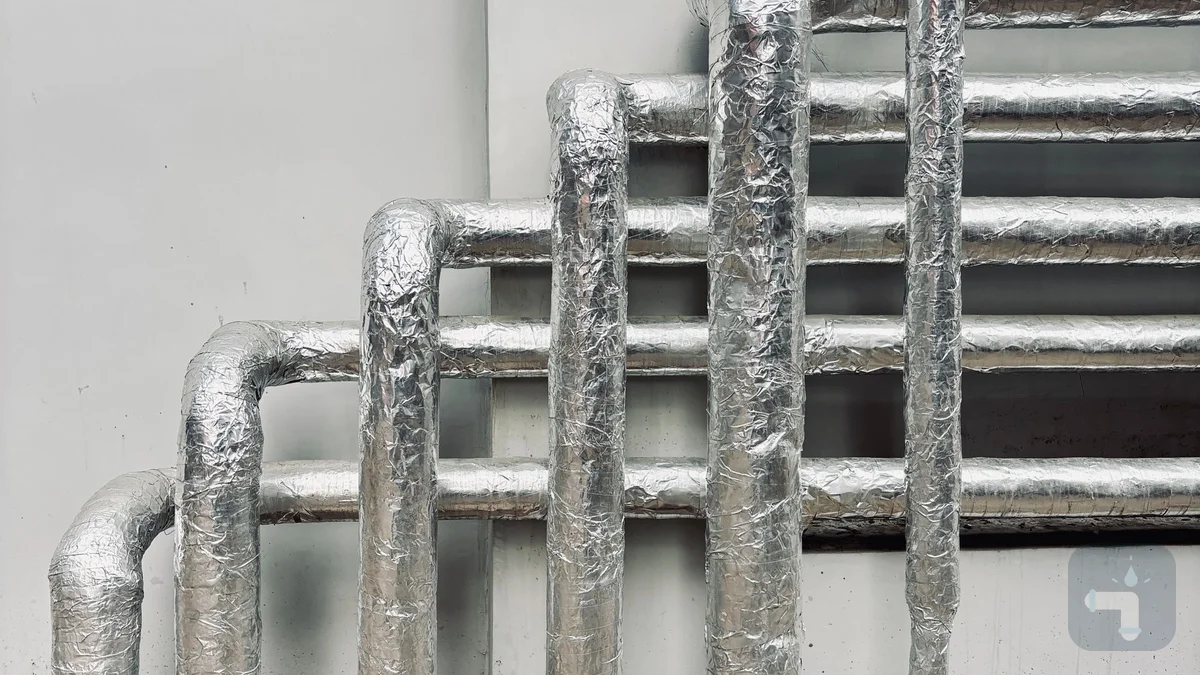
Insulate every pipe you can see in an unheated space: the crawlspace, the basement, the garage, and the attic. Start with the outdoor faucets and the pipes in exterior walls, then the crawlspace runs, then the garage lines. A foam sleeve costs little and takes minutes to fit.
If you only have an hour, spend it here — in order:
Fit the sleeves snugly and tape the joints so no bare pipe shows. Pay attention to elbows and the places where a pipe passes through a wall or a rim joist: those are the cold bridges, and a short bare stretch is all a freeze needs. If you run out of sleeves partway through, finish the outdoor faucets and the exterior-wall runs first and come back for the rest tomorrow; the prevention checklist has the full version of this job for the weekend after the freeze passes.
Opening the cabinet doors lets warm room air reach the pipes behind the sink, which is often the only heat those runs get. It costs nothing, takes seconds, and it is the single easiest thing you can do for a kitchen or bathroom sink on an exterior wall tonight.
Pipes on an exterior wall sit in the coldest part of the house, separated from the room by a closed cabinet door and a thin panel. Open the doors under every sink that backs onto an outside wall before bed, and leave them open all night. If the sink is in a bathroom that stays shut, leave that door open too so the warm air can circulate. Keep cleaning products and anything a child or pet could reach out of the open cabinets, and put them back in the morning. This is a tonight-only habit, not a winter-long one: once the cold snap passes, the pipes go back to normal.
Yes, on a night like tonight. Let one faucet run in a slow, pencil-thin stream — the one farthest from where water enters the house. Moving water is far harder to freeze than still water, and the open tap also relieves pressure, which is what actually splits a pipe.
One faucet is enough. The point is to keep water moving through the whole system, and the farthest faucet does that for the longest run. Open it just enough to make a steady thin stream, not a full flow, and put the stopper in or a container underneath if the dripping sound bothers you. Do it for tonight only, not all winter; running a tap every night wastes water and masks the real fixes, like insulation, that should follow. If the pressure is weak or the stream stops, the pipe may already be freezing — leave the tap open and check the shutoff section below.
Your main shutoff is usually where the water line enters the house: a basement wall near the front of the house, a crawlspace entry, a utility closet, or beside the water meter. Find it and test it today, before you need it in the dark with water running somewhere it should not be.
A burst pipe at 2 a.m. is a shutoff job first and a phone call second: every minute the main stays open is more water in the walls and floors. Turn the valve off and on once to make sure it moves freely; if it is stiff, work it gently and do not force it, then note its position for the household. Put a tag or a strip of tape on it so anyone in the house can find it fast, and make sure everyone knows that the first move after finding water is the valve, not the phone. Our shutoff guide walks through the valve types and what to do if yours is hard to reach.
If you cannot find a shutoff at all, the meter outside may have one. The line up to the meter is the water provider’s; the line from the meter in is the homeowner’s. If tonight brings water where it should not be, call (720) 918-0220 and we will connect you with an independent local provider.
These are the coldest parts of the house, and the pipes there freeze first. Insulate the runs you can reach, close the crawlspace vents and the garage door, and seal the gaps where pipes pass through rim joists. A cold draft through a rim joist will freeze a pipe faster than still cold air ever could.
If the crawlspace is too tight or too cold to work in today, do the garage and basement runs first and leave the crawlspace sleeves for the next mild day — but keep the vents and the access door shut tonight, and watch the faucets those runs feed.
Walk the house with your hand on the walls. Feel for the cold stretches along exterior walls, around windows, and where pipes pass through rim joists, and look for drafts where pipes enter the house. The coldest pipe in the house is usually the one you already suspected.
Start at the sinks on the north and west walls, then the basement and the crawlspace entrance. A wall that feels distinctly colder than the room, a draft at a pipe entry, or a patch of condensation on a cold morning all point to the same thing: a run with too little protection. Check the meter after you have finished: with every faucet closed, the meter should be still. If it is moving, water is escaping somewhere, and that is a shutoff-and-call situation, not a checklist item. Note which walls and runs were cold, and put them at the top of the insulation list for the first mild weekend after the freeze.
Work it top to bottom and you are done before dark.
| Task | Where | Time it takes |
|---|---|---|
| Disconnect every garden hose | Outdoor spigots | 10 minutes |
| Drain and cover the outdoor faucets | Exterior walls | 15 minutes |
| Insulate exposed pipes | Crawlspace, basement, garage | 30 to 45 minutes |
| Seal drafts around pipe entries | Rim joists, wall penetrations | 20 minutes |
| Open cabinet doors | Sinks on exterior walls | 2 minutes |
| Find and test the main shutoff | Where water enters the house | 10 minutes |
| Set the heat to 55°F or higher | Thermostat | 1 minute |
| Start a slow drip | Faucet farthest from the water entry | 1 minute |
| Walk the cold spots and check the meter | Crawlspace, garage, basement | 15 minutes |
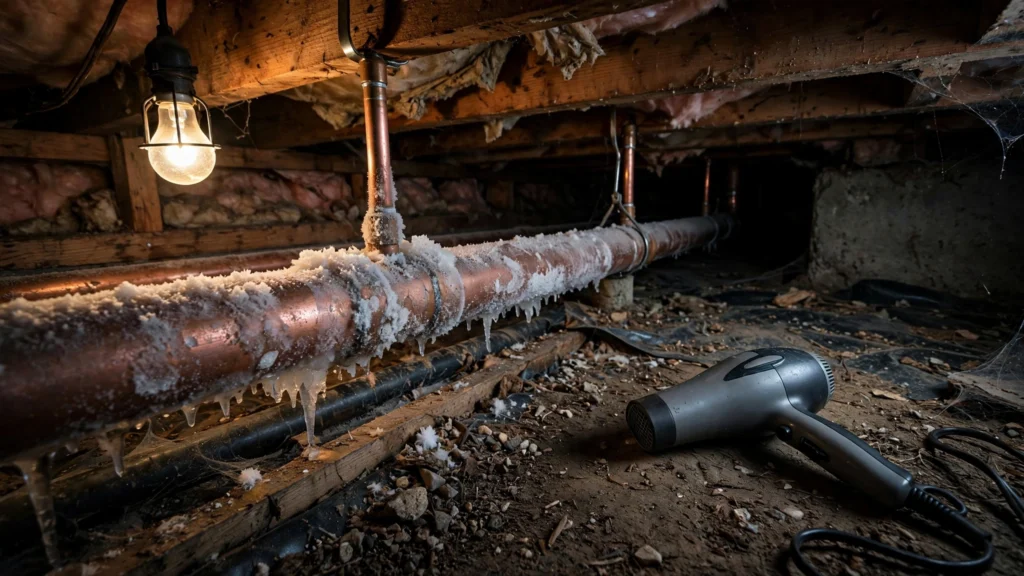
Open the faucet the pipe feeds, then warm the run gently with a space heater, a heating pad, or a hair dryer kept moving, working from the faucet side so melting water can escape. Never use a torch or open flame. If flow does not return in a couple of hours, shut off the main and call.
A frozen pipe and a burst pipe are two different problems, and the thaw is where one turns into the other: a split plugged by its own ice only starts leaking when the ice melts. That is why the faucet stays open while you thaw, and why the hour after water returns is a leak watch, not an all-clear. Check the wall for dampness, the floor below for water, and the meter with everything closed. Our guide to thawing a frozen pipe inside a wall walks through the slow, safe version step by step, and the frozen pipe repair page is the route if you would rather have a provider handle it from the start.
Call the moment you find water where it should not be, the moment a faucet stops entirely and gentle heat brings nothing back, or the moment you find a split. Waiting through the night turns a repair into a flood, and the call costs nothing.
For a standard burst pipe repair, expect the typical area range of $788 to $3,153 as an estimate, with the final cost depending on where the break is and how much water got out. An overnight visit commonly adds a call-out fee of $100 to $250. One call to (720) 918-0220 connects you with an independent local provider, day or night — and the call itself is free.
Brighton Burst Pipe is a referral service. The same checklist works across the area we serve, from Brighton to the surrounding towns, including burst pipe repair in Thornton, CO. If tonight is the first freeze your home has faced, run the list, keep the number handy, and check the faucets once more before bed.
Water freezes at 32°F, but the pipe’s surroundings decide the real risk. Uninsulated pipes in exterior walls and crawlspaces can freeze when outdoor temperatures sit in the 20s, and sustained temperatures of 20°F or below for six hours or more are the danger zone for most homes. Wind and poor insulation move that threshold up.
Yes. Keep the thermostat at 55°F or higher, day and night, all winter, including when you travel. Turning the heat off to save money is the most expensive winter mistake a homeowner can make, and a cold house is how pipes freeze while nobody is there to notice.
No, one is enough. A slow, pencil-thin stream from the faucet farthest from where water enters the house keeps water moving through the longest run and relieves pressure. Running every tap wastes water and does not protect the pipes any better.
Shut off the main water valve first, then call (720) 918-0220. Every minute the main stays open is more water in the walls and floors. The call is free, and we will connect you with an independent local provider who can come out, day or night.
Most Brighton homes can run the whole list in a couple of hours, and the outdoor jobs take minutes. Insulating the crawlspace runs is the longest job; everything else is a ten-minute task. Start outside, before dark, and the rest of the list follows quickly.
Do not force the handle, and do not aim a torch or a heat gun at it. Leave the faucet alone, protect the interior run feeding it, and let the temperature rise. If the flow stops entirely, or water appears inside, shut off the main and call (720) 918-0220.
Run the list, check the faucets once more before bed, and keep the number where the whole household can find it. If tonight brings a frozen pipe or a burst, one call connects you with an independent local provider in the Brighton area — the call itself costs nothing.
 Brighton Burst PipeBurst Pipe Repair · Brighton, CO