
 Brighton Burst PipeBurst Pipe Repair · Brighton, CO
Leak Detection in Fort Lupton, CO
Think you have a hidden leak in Fort Lupton? Call (720) 918-0220 and you will be connected to an independent local provider who can find it. The call is free, and there is no charge to talk through what you are seeing first.
Fort Lupton has the oldest housing stock in the Brighton ring, and that changes how leaks behave here. In an older home, water can run behind a wall, under a floor, or under a slab for weeks before you notice a thing. By then the bill has climbed, the damp patch has spread, and the repair is bigger than it needed to be.
This page explains what leak detection covers in Fort Lupton, why hidden leaks are so common here, and what to do first if you suspect one — for homeowners in ZIP code 80621, from the older streets near the town centre to the larger subdivisions on the edge of town.
What does leak detection cover in Fort Lupton?
Leak detection covers finding where water is escaping when you cannot see the break itself. A hidden leak might be in a supply line inside a wall, a drain line under the floor, a slab line buried in concrete, or a buried line outside the house.
The signs are often small at first: your water bill creeps up with no change in use, a damp patch does not dry out, one room smells musty, part of the floor feels warm, or your water meter keeps turning when every tap is off. None proves a leak alone, but together they form a strong pattern.
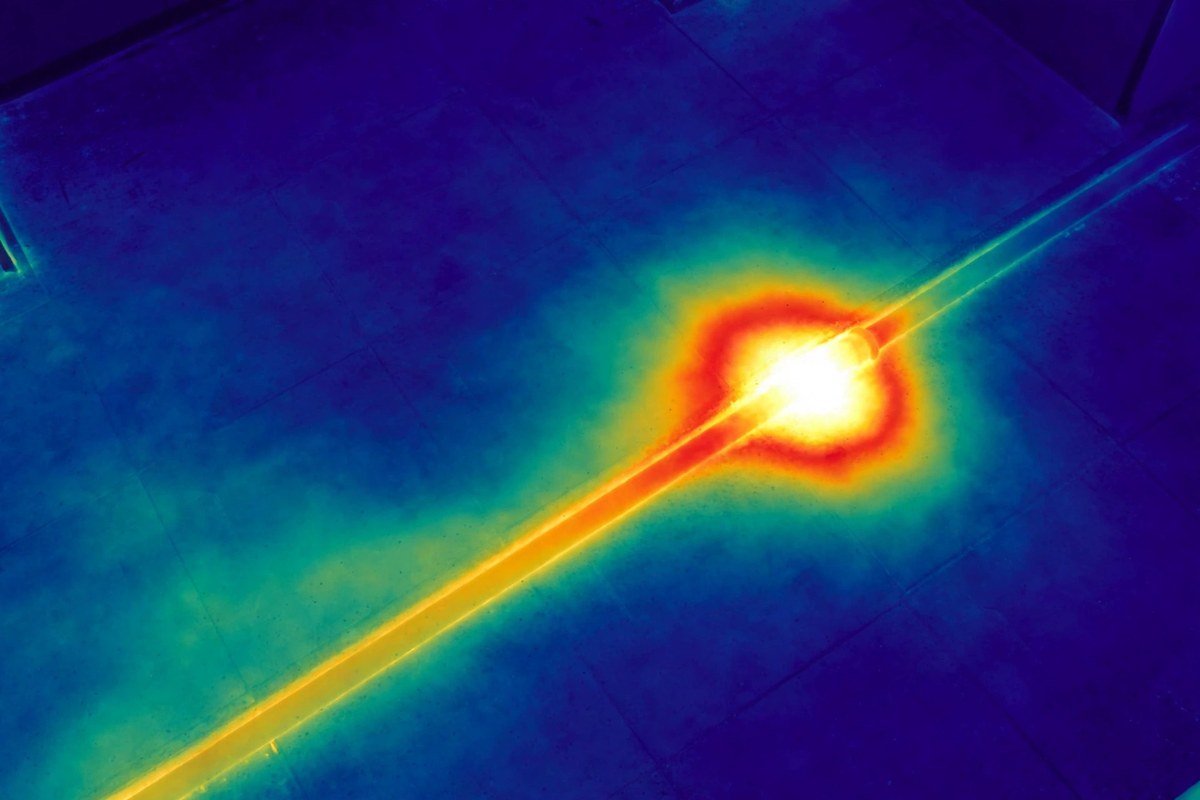
A provider checks those signs with tools, not guesswork. Moisture meters show how wet a wall or floor is and where the wet area stops. Thermal imaging can show a warm line or a cold wet patch through a surface. Acoustic listening picks up the sound of water escaping from a pressurised line. Pressure testing confirms whether a section holds pressure or loses it. Together, those checks narrow a whole house down to one likely spot.
That matters for slab leaks. In 1980s and 1990s Fort Lupton homes on slab foundations, lines can be buried in the concrete. Detection aims to find a slab leak without breaking the floor first, so any opening is small and in the right place. It also separates a supply leak, which runs under pressure and wastes a lot of water, from a drain leak, which only leaks in use and shows up as damp and smell rather than a high bill. The fix differs for each, so that call matters.
If the signs sound familiar, read our guide to hidden pipe leak signs and detection next, or call (720) 918-0220 and describe what you have noticed.
Why are hidden leaks common in Fort Lupton homes?
Start with age. Fort Lupton has 8,897 residents and 2,904 homes, and the median year built is 1980. Of those homes, 1,448 — 49.9% — were built before 1980, the highest pre-1980 share of any town in the Brighton ring. Older homes mean older pipe and joints, and more years of shifts and corrosion. A forty-year-old pipe does not need a freeze to start leaking. It can simply wear thin.
The layout adds to it. Near the town centre are the oldest homes, with ageing pipe, crawl spaces, and uninsulated additions — all hard to inspect, so a slow leak can sit out of sight. On the edge of town, the 1990s–2000s subdivisions are larger two-storey homes with PEX and long runs. More hidden pipe means a leak on an upper floor can travel a long way before it stains the ceiling below.
The ground plays a part too. Fort Lupton sits by the South Platte River flats, where the water table is high and the ground stays wet and cold. Buried lines run colder, and wet soil hides an outdoor leak that would form a clear puddle in drier ground. The first sign inside may only be a rising bill.
Then there is the slab stock. Homes built here in the 1980s and 1990s often sit on slab foundations with lines buried in concrete. When one leaks, there is no crawl space and no visible pipe to check. The clues are indirect: a warm floor spot, a damp carpet edge, or a bill that will not come down. You cannot find these leaks by looking harder. You find them by measuring.
What should you do first if you suspect a leak?
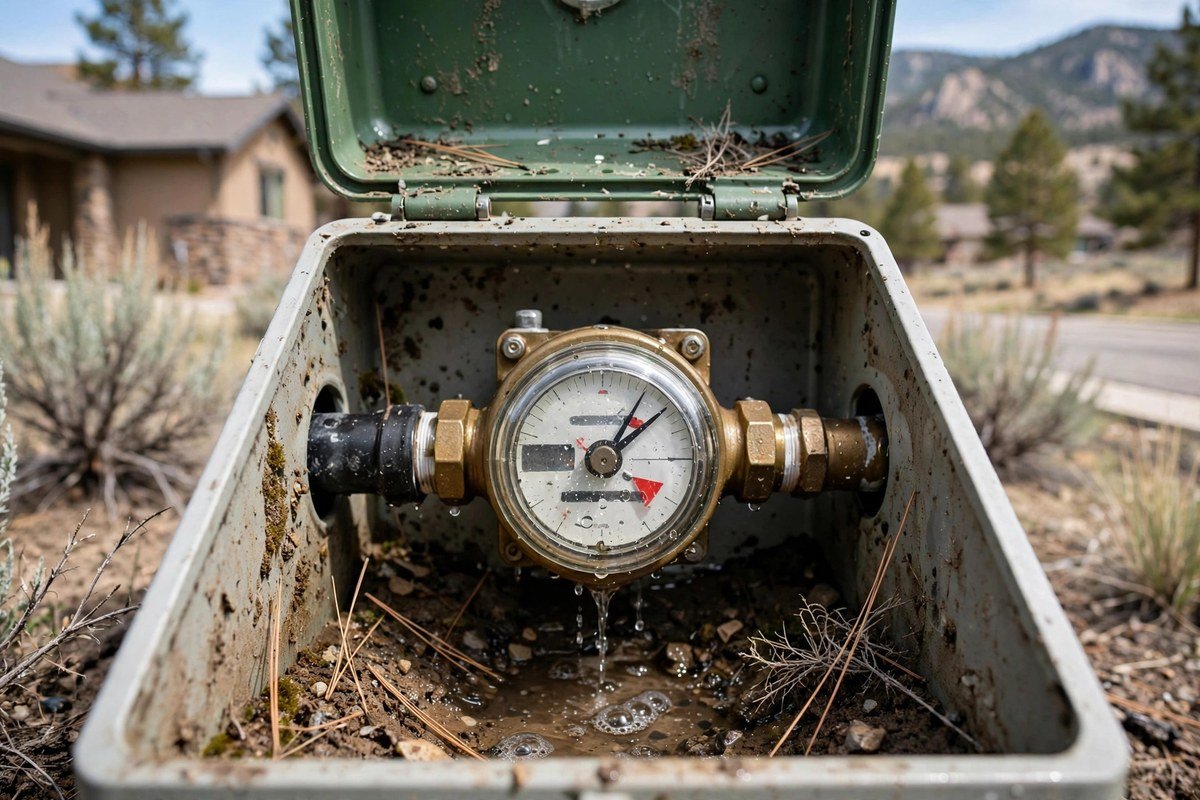
Do the meter test first. It takes 15 minutes, costs nothing, and tells you whether water is moving when it should not be. Turn off every tap and make sure no water-using appliance is running. Note the meter reading, or take a photo of it. Leave everything off for 15 minutes, then check again.
If the reading has not moved, water is probably not running at that moment, though a drain leak can still hide because it only leaks in use. If the meter has moved, water is going somewhere. That does not tell you where, but it turns a worry into a fact, and a provider will want to know it.
While you wait, walk the house once. Feel for damp at the base of walls, look under sinks, check around the water heater, and note any musty smell. Do not cut into walls or pull up flooring to hunt for it yourself. Opening the wrong place adds repair work and may still miss the source.
If water is coming through a ceiling or pooling on a floor, treat that as urgent. Shut off the water at the main if you can reach it safely, and call straight away. For a burst rather than a slow leak, see burst pipe repair in Fort Lupton, CO. For a suspected hidden leak, call (720) 918-0220 and share your meter test result.
How does the referral work?
It is simple, and it is worth stating plainly. Brighton Burst Pipe is a referral service, not a plumbing company. We do not do the detection ourselves, and we do not send our own crew to your home.
When you call (720) 918-0220, you are connected to an independent local provider who serves Fort Lupton. You describe the signs and your meter test result if you did one. The provider decides how to run the detection visit. If work goes ahead, you pay that provider directly.
Pricing follows the same rule. The provider prices detection after seeing the home, because easy access and a suspected slab leak in a large two-storey home are not the same job. Nobody should quote a firm price for unseen work, and we will not do it here. Expect a clear price from the provider before work starts, based on what they have actually seen.
What happens after the leak is found?
Once the leak is located, the provider will explain what kind it is, where it is, and what repair it needs. Ask them to show you the readings or the spot they found. A supply leak, a drain leak and a slab leak can each have more than one repair route, depending on access and on the pipe around the break. For slab work, read slab leak repair before you agree to any floor work.
Only at this stage do repair figures apply, and only if a found leak becomes a repair. Repairing a burst or leaking section runs $200 to $3,000, with most jobs around $500. Replacement sections run $150 to $250 per linear foot. An emergency call-out, if your case is urgent, runs $100 to $300, and labour runs $100 to $350 per hour. If water has damaged floors or walls, cleanup and drying runs $3 to $7.50 per square foot. Those are published ranges, not a quote. Only the provider who sees the job can give a final price, before repair work starts.
Finding a leak early keeps you at the lower end of that range. A leak caught from a bill increase is a different job from one found after a ceiling sags. In a town with this much older stock, that early check is not overreacting. It is the sensible step.
Related guides
- Hidden pipe leak signs and detection
- Slab leak repair
- Leak detection in Brighton, CO — the parent guide for the area
- Burst pipe repair in Fort Lupton, CO
Frequently asked questions
How do I know if I have a hidden leak in my Fort Lupton home?
Watch for a water bill that creeps up with no change in use, damp patches that do not dry, a musty smell in one room, warm spots on the floor, or a meter that keeps turning when no tap is on. Any one of those is worth checking. Two together usually means water is going somewhere you cannot see.
Can a slab leak be found without breaking my floor?
Yes, in most cases. A provider can use moisture meters, thermal imaging, acoustic listening and pressure testing to narrow the leak down before any floor comes up. That is the point of detection first: find the spot, confirm it, and only then talk about opening the smallest area needed for repair.
Should I check my water meter before I call?
Yes, if you can do it safely. Turn off every tap and appliance that uses water, note the meter reading, and leave everything off for 15 minutes. If the meter has moved, water is still running somewhere in the system. Tell the provider what you found, because that result helps them plan the visit.
Is Brighton Burst Pipe the company that does the detection?
No. Brighton Burst Pipe is a referral service, not a plumbing company. When you call (720) 918-0220, you are connected to an independent local provider who does the detection and any repair. You pay that provider directly for their work, and they price the job after seeing your home.
What will it cost if a hidden leak turns into a repair?
Detection itself is priced by the provider after seeing the home, so no honest price can be given unseen. If a found leak needs repair, the published range for a burst or leaking section is $200 to $3,000, with most jobs around $500. You will get the provider’s own price before any repair work starts.
Ready to get that hidden leak checked? Call (720) 918-0220 now. You will be connected to an independent local provider serving Fort Lupton who can run the detection, explain what they find in plain terms, and price any repair only after seeing it. The call is free — the sooner you check, the smaller the job usually stays.