 Brighton Burst PipeBurst Pipe Repair · Brighton, CO

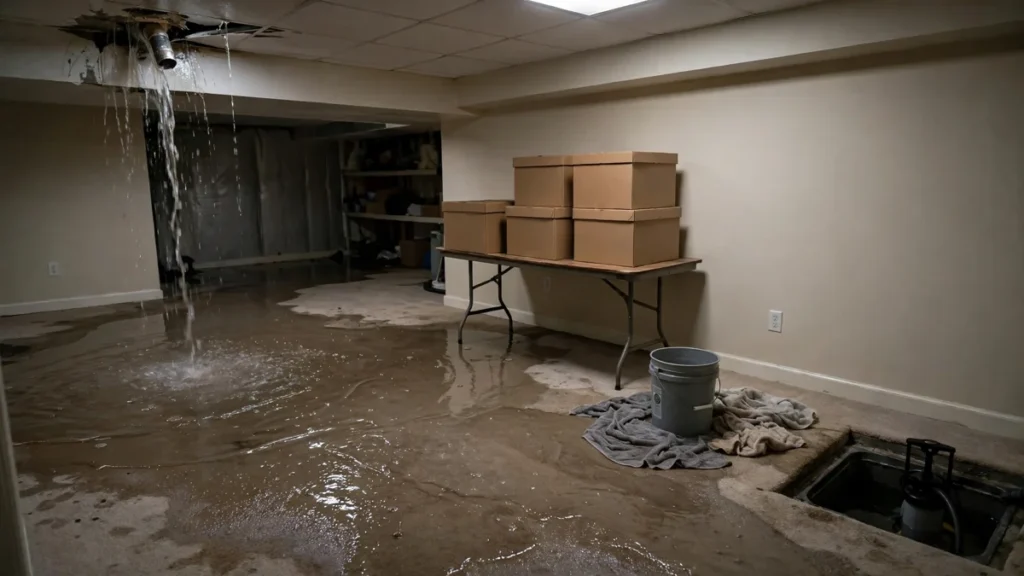
Finding water at the bottom of your water heater is one of those moments when it pays to act first and work out the details afterwards. A small puddle can be a loose valve or a fitting that can be repaired. A spreading pool, especially with rust, usually means the tank itself has failed — and a tank that has failed will not repair itself. This guide explains what a leak from the bottom means, what to do in the first few minutes, how a provider works out the cause, and what it is likely to cost.
It is written for Brighton homes, where very hard water, cold winters, and tanks that are often in basements or garages shape how a leak behaves and how quickly it is noticed. Brighton Burst Pipe is a referral service, not a plumbing company: when you call (720) 918-0220, we connect you with an independent local provider who can attend, find the source of the leak, and quote for the repair or replacement.
What should you do first if your water heater is leaking from the bottom?
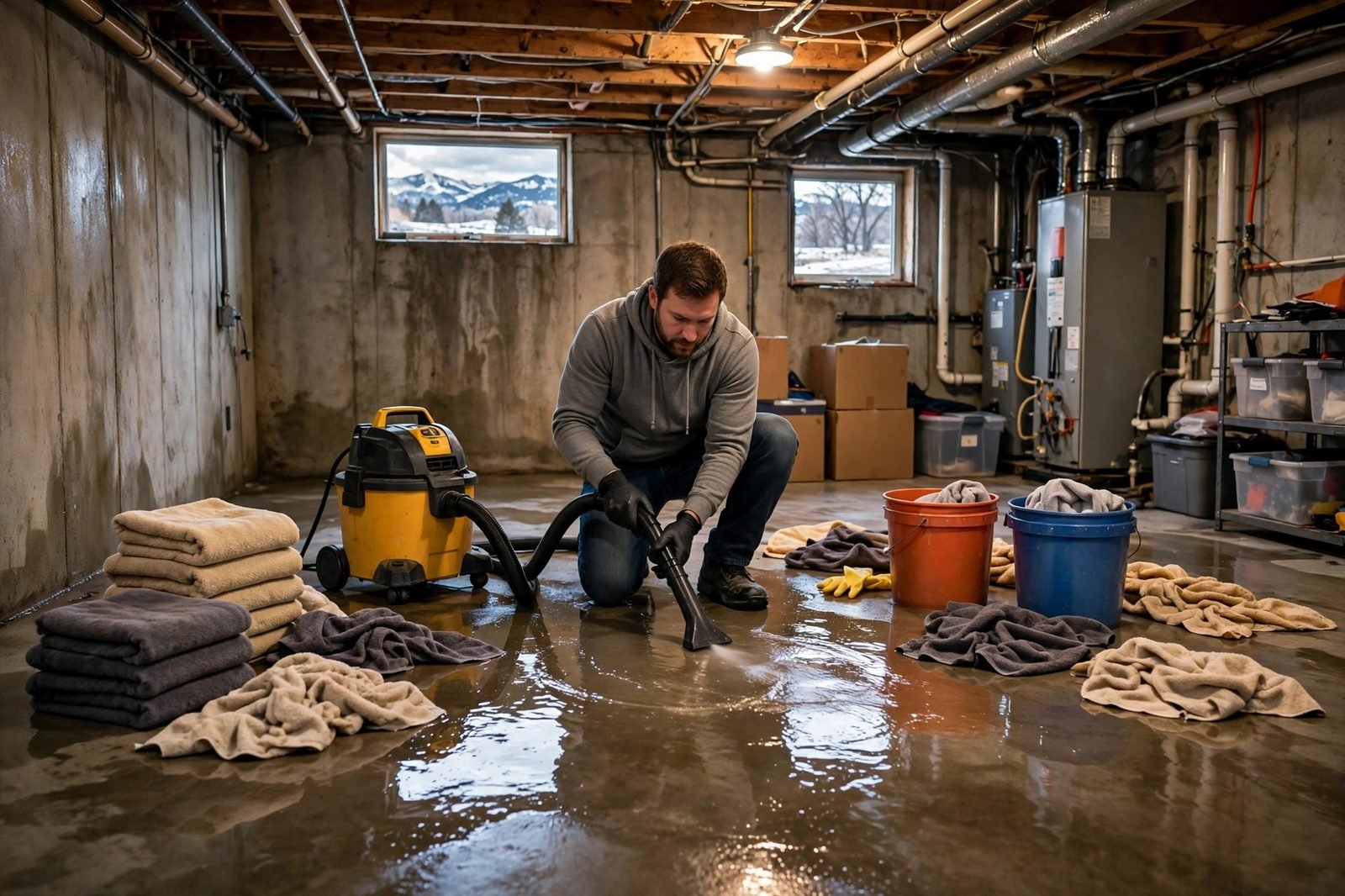
First, make it safe. Turn off the power or gas to the heater — the breaker for an electric heater, or the gas control for a gas heater. Then turn off the water supply to the heater if you can do so safely; there is usually a cold-water shut-off valve on the pipe above the heater. If you cannot find it, or you are not sure, turn off the main water supply to the house. Do not touch electrical switches or appliances standing in water, and do not step into standing water near the heater.
- Turn off the power or gas to the heater.
- Turn off the water supply to the heater, or the main supply if you need to.
- Contain the water with towels, and move rugs, boxes, and anything that can be damaged out of the way.
- Do not keep using hot water — every tap you run feeds the leak.
- Call for help, and tell the provider where the water is coming from, how fast it is spreading, and the age of the heater if you know it.
- Take a photo of the leak and of the rating plate, which shows the make, model, and age. It helps the provider bring the right parts.
If the leak is small and slow, and you have contained it, a scheduled visit may be enough. If water is spreading across the floor, running into other rooms, or coming through a ceiling, treat it as urgent. An emergency call-out is listed on this site at $100–$300, and a burst pipe repair at $200–$3,000, averaging around $500, with water damage clean-up at $3–$7.50 per square foot — so stopping the water early is worth far more than the call-out charge.
Where is the leak actually coming from?
Water at the bottom of a heater does not always come from the bottom of the tank. Water runs down, so a leak from a fitting at the top can end up as a puddle at the base. A provider will dry the heater, watch where the water reappears, and work through the likely sources in order — and you can do the first part of that yourself, if it is safe to do so.
- The drain valve. The small tap at the bottom of the tank is used to flush sediment. It can drip if it is not fully closed, if its washer has worn, or if sediment is holding it open. A dripping drain valve is usually a repair, not a replacement.
- A fitting or pipe joint. The cold-water inlet and hot-water outlet at the top, and the pipes connected to them, can leak at a joint. The water runs down the side of the tank and pools at the base, which makes it look like the tank itself is leaking. Tightening or replacing a fitting is usually a straightforward repair.
- The temperature and pressure relief valve. The relief valve, usually on the side or top of the tank, releases water if the pressure or temperature gets too high. Water from its discharge pipe can pool at the base. A relief valve that keeps opening may mean the valve has failed, the pressure is too high, or the expansion tank has failed — all of which a provider should check.
- Condensation. In a cold basement or garage, especially in winter, condensation can form on a cold tank and drip to the floor. It is usually a small amount, it comes and goes with the weather, and the water is clear with no rust. If you are not sure, dry the floor and check again in a few hours.
- The tank itself. Rust, a crack, or a failed weld in the tank lets water out from the bottom or the lower sides. The water is often rusty, the leak does not stop, and it gets worse over time. A leaking tank cannot be repaired reliably — it needs to be replaced.
How do you tell the difference? Dry the floor and the tank, then watch. Water that reappears from a valve or a joint points to that part. Water that seeps from the tank itself, especially with rust or with a damp patch that grows even when the heater is off, points to the tank. A provider will also check the age of the heater: a standard tank water heater in Brighton usually lasts 8–12 years, and a leaking tank over ten years old is almost always a replacement, not a repair.
Why do water heater tanks leak in Brighton?
Tanks leak from the inside out. A steel tank is protected by a glass lining and by an anode rod, a metal rod inside the tank that corrodes in place of the tank itself. Over time, the lining cracks, the anode rod is used up, and the steel starts to rust. Once rust has eaten through the tank wall, water finds its way out — usually at the bottom, where sediment and water sit together.
Brighton hard water speeds that process up. At 15–20 grains per gallon, scale builds up inside the tank, the anode rod is used up faster, and a tank that has never been flushed will fail sooner than one that has been maintained. An annual flush and maintenance visit is listed on this site at $100–$250 nationally, and it is the best chance a provider has to check the anode rod before the tank itself starts to fail. Sediment also causes hot spots in the tank, which weaken the metal and shorten its life.
High water pressure can also play a part. If the pressure in the house is too high, or the expansion tank has failed, the relief valve will keep opening, and the tank is put under repeated strain. A provider who is replacing a heater should check the pressure and the expansion tank as part of the job, not just swap the tank and leave the cause in place.
Can a leaking water heater be repaired?
It depends on where the leak is. A leaking drain valve, a loose fitting, a failed relief valve, or a worn washer can usually be repaired. A leaking tank cannot be repaired reliably. The tank is a sealed, pressurised vessel, and once the steel has rusted through, patching it is at best a short delay before it leaks again — and at worst a safety risk. Any provider who offers to patch a leaking tank should be asked, in plain terms, how long the repair will last and what happens when it fails again.
Age helps you decide. As a rule of thumb used on this site, a heater under eight years old with a single failed part is usually worth repairing, while a heater over ten years old, or one that needs a second major repair, is usually better replaced. A leaking tank on a twelve-year-old heater is a replacement, not a repair, whatever the leak looks like today. A leaking valve on a five-year-old heater is a repair, and it is worth doing properly so the heater can carry on for the rest of its life.
How much does it cost to fix a leaking water heater?
A diagnostic visit and a minor repair typically cost $150–$600 nationally, according to the figures published on this site. That range covers a valve, a fitting, a thermostat, or a heating element, with the diagnosis and the labour included. It does not cover a new tank. A standard tank replacement of 40–50 gallons, including unit and installation, is listed at $1,500–$3,500 nationally, and a tankless installation at $2,500–$5,500 nationally. Labour is listed at $100–$350 per hour, and an emergency call-out at $100–$300.
Those figures are national ranges, not a quote for your home. The final price depends on the cause of the leak, the age and type of heater, access, and whether the call is an emergency. Ask for the diagnosis, the part, and the labour to be listed separately, and ask whether the price includes checking the pressure, the expansion tank, and the relief valve — the parts that, if they are left unchecked, can cause the new heater to fail early too.
Do not forget the water damage. A leak that has been running for days can damage flooring, skirting, drywall, and belongings, and water damage clean-up is listed on this site at $3–$7.50 per square foot. If the floor is wet, lift rugs and move boxes, and dry the area as soon as the water is off. If drywall or flooring has been soaked, tell the provider — drying and repair may be a separate job, and it should be planned, not left to chance.
What will a provider do when they arrive?
- Find the source. Dry the heater, watch where the water reappears, and check the drain valve, the fittings, the relief valve, and the tank itself.
- Check the age and condition. The rating plate gives the age, and the condition of the tank, the anode rod, and the fittings shows whether a repair is sensible.
- Check the pressure and safety parts. The water pressure, the expansion tank, and the relief valve should all be checked, because a fault in any of them can cause a leak.
- Give you a clear choice. A repair quote and a replacement quote, side by side, with the reasoning — not just a price.
- Test the repair or the new heater. Run the water, check for leaks, and check that the temperature and pressure are correct before leaving.
Ask the provider to show you the failed part and to explain what it does. Ask whether the repair is covered by any remaining manufacturer warranty, and whether the work itself carries a warranty. And ask what would make the price change once work starts — for example, a corroded fitting that breaks when it is moved, or a flue that is found to be unsafe. A clear answer to that question is a good sign.
How can you stop a water heater leaking again?
- Flush the tank every year. In water at 15–20 grains per gallon, sediment builds up fast. Annual flushing, listed at $100–$250 nationally, removes it and lets the provider check the anode rod.
- Check the anode rod. A worn anode rod leaves the tank unprotected. Replacing it is far cheaper than replacing a rusted tank.
- Check the pressure. If the relief valve keeps opening, ask a provider to check the house pressure and the expansion tank.
- Look around the heater regularly. A quick check once a month, especially in winter, catches a small leak before it becomes a flood. Look for water, rust, and damp patches on the floor and on the tank.
- Know where the shut-off is. Know how to turn off the water, gas, or electricity to the heater before you need to. In a leak, that knowledge saves floors.
- Consider a water softener. Softening the water reduces scale in the heater and in pipes, and slows further build-up.
Frequently Asked Questions
What does it mean if my water heater is leaking from the bottom?
It usually means either a valve or fitting is leaking, which can often be repaired, or the tank itself has rusted through, which cannot be repaired reliably and needs replacement. A provider can tell you which one it is by drying the heater and watching where the water reappears.
Should I turn my water heater off if it is leaking?
Yes. Turn off the power or gas to the heater, turn off the water supply to it if you can do so safely, contain the water, and call for help. Do not keep using hot water, and do not touch electrical switches or appliances standing in water.
Can a leaking water heater tank be repaired?
No, not reliably. A leaking drain valve or fitting can be repaired, but a tank that has rusted through needs to be replaced. Patching a leaking tank is at best a short delay before it leaks again.
How much does it cost to fix a leaking water heater?
A diagnostic visit and a minor repair typically cost $150–$600 nationally, according to the figures published on this site. A standard tank replacement of 40–50 gallons, including unit and installation, is listed at $1,500–$3,500 nationally.
Is a leaking water heater an emergency?
It depends on how fast the water is spreading. A small, contained drip can wait for a scheduled visit. Water spreading across the floor, running into other rooms, or coming through a ceiling should be treated as urgent. An emergency call-out is listed on this site at $100–$300.
Why do water heaters leak in Brighton?
Brighton water is very hard, at 15–20 grains per gallon, so scale builds up inside tanks and the anode rod is used up faster. A tank that has never been flushed will rust sooner than one that has been maintained, and a standard tank usually lasts 8–12 years.
Water heater leaking in Brighton?
If there is water at the bottom of your water heater, do not wait to see whether it stops — it will not, and the water damage will only grow. Call (720) 918-0220 and we will connect you with an independent local provider in the Brighton area who can find the source of the leak, explain whether a repair or a replacement is needed, and quote for the work. Tell them where the water is coming from, how fast it is spreading, and the age of the heater if you know it — that helps them bring the right parts and give you a clear price.