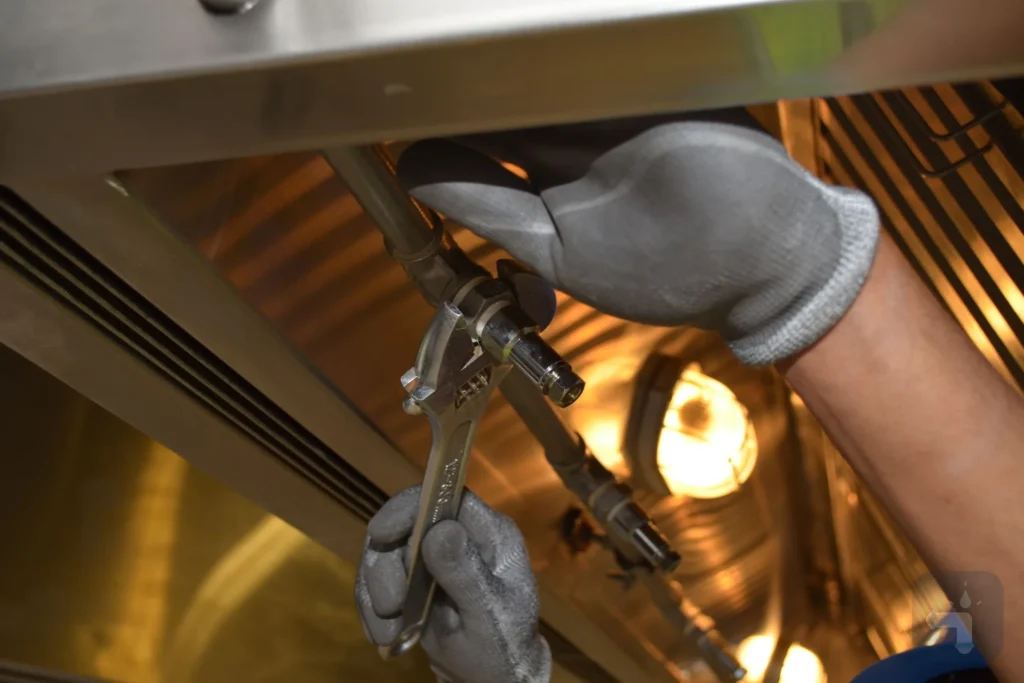
A burst pipe can release hundreds of gallons per hour. What you do in the first five minutes decides whether this is a repair bill or a renovation. Here is the exact sequence.
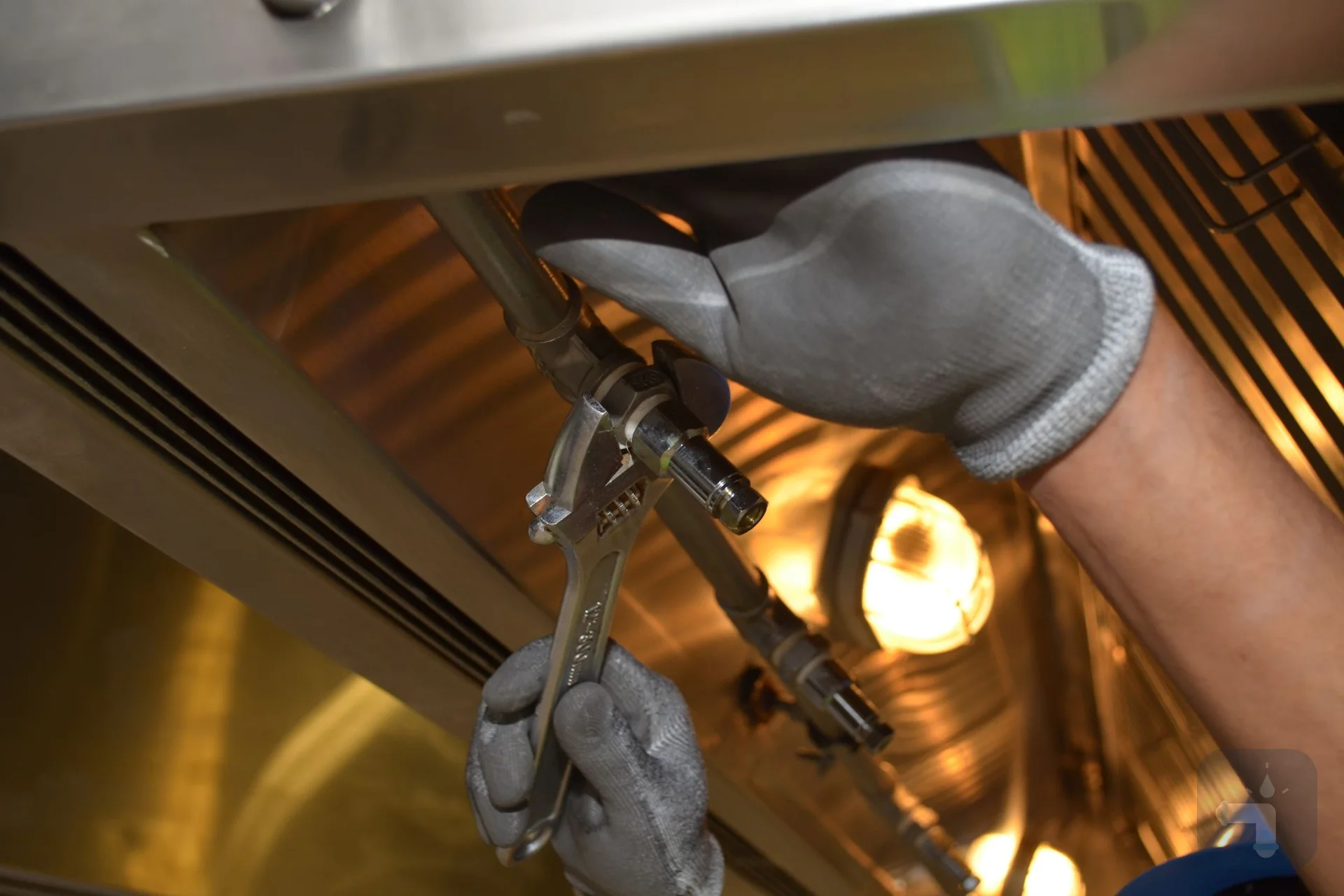
A burst supply line does not drip — it flows. A typical residential supply line at normal pressure can release hundreds of gallons per hour, which means a burst left running while you search for a plumber’s number can put inches of water across a floor. Drywall wicks water upward, insulation soaks it like a sponge, and wood subflooring starts swelling within hours.
The good news: one action stops almost all of it. Closing the main valve cuts the supply, and everything after that is damage control, not damage growth. That is why this guide starts with the valve and not with the phone.
Shut the main valve. Street-facing side, where the line enters. Turn clockwise until it stops.
Cut power to any area where water reached outlets, switches, or the panel.
Open faucets — two or three — to drain leftover pressure from the lines.
Photograph everything before touching anything. Video the flow if still active.
Call (720) 918-0220. Say where the water is and whether the valve is off.
Most homeowners have never touched their shutoff valve. That is normal — and it is exactly why you should find it today, not during an emergency. Walk your home on a calm day:
You will see one of two types: a gate valve (round wheel handle — turn clockwise several rotations) or a ball valve (lever handle — turn 90 degrees so it sits perpendicular to the pipe). Our full guide to shutting off your main water valve walks through both types with photos of what to look for.
A valve that has not moved in a decade can seize. Do not force it with pliers hard enough to snap the stem — a broken valve is worse than a slow one. If it will not budge, call (720) 918-0220 immediately and say the valve is stuck; the provider can shut off at the curb stop or meter while guiding you. After the emergency, have the valve replaced — a shutoff you cannot shut off is not a shutoff.
This is the safety step people skip in the panic. Standing water is one thing; standing water with a live current running through it is another. Rubber boots and good intentions do not make you an electrician. When in doubt, stay out of the water and wait.
Not every water emergency is a burst pipe, and the distinction changes what happens next:
| Sign | Burst Pipe | Major Leak |
|---|---|---|
| Flow rate | Sudden, high-volume flow or spray | Steady drip or seep, building over time |
| Onset | Sudden — often with a bang or pop sound | Gradual — stain grows over days or weeks |
| Sound | Hissing, spraying, or rushing water | Occasional dripping, often silent |
| Water meter | Spins rapidly with all fixtures off | Moves slowly or intermittently |
| First action | Main valve off immediately | Main valve off, then leak detection |
When in doubt, treat it as a burst. Shutting the main valve costs nothing and is reversible; letting a burst run while you diagnose is not.
Your first-minutes documentation can decide an insurance claim. Water damage carries one of the highest claim denial rates, and insurers draw a hard line between sudden bursts (usually covered) and gradual leaks (often denied). Photograph:
Keep every receipt from emergency work, and do not discard damaged materials until the adjuster has seen them. Our main emergency burst pipe repair guide has the full insurance breakdown.
A burst residential supply line can release hundreds of gallons per hour at normal municipal pressure. That is why the first action is always the main valve — every minute of flow is measurable damage.
Stop the water first, document everything, then call (720) 918-0220 to get connected with a provider. Call your insurer the same day — early notification strengthens the claim — but stopping the damage comes before paperwork.
A pipe repair clamp or rubber-and-hose-clamp patch can slow a small split until a provider arrives, but it is not a repair. Pressurized lines defeat most DIY patches, and anything inside a wall needs a proper fix. Use a temporary patch only to buy time, not to skip the call.
Often the provider can isolate the burst section and restore water to the rest of the house the same visit. Ask when you call — describe which line burst and where.
Shut the main valve anyway, then watch for the signs: the meter test (all fixtures off, meter still moving means water is going somewhere), new stains, musty smells, or warm spots on floors for hot-water lines. A provider can pinpoint it with moisture meters and thermal imaging — see our leak detection guide.
Shut off your main valve, then call. We will connect you with an independent local provider in the Brighton area — the call itself costs nothing.
 Brighton Burst PipeBurst Pipe Repair · Brighton, CO