
 Brighton Burst PipeBurst Pipe Repair · Brighton, CO
Pipe Replacement & Repiping in Thornton, CO
Old pipes leaking again, pressure dropping, water tasting off? Talk through a repipe before the next patch fails. Call (720) 918-0220 and we’ll connect you with an independent local provider who can look at your home in person.
Brighton Burst Pipe is a referral service, not a plumbing company. We connect you with an independent local provider, and you pay the provider directly.
Thornton isn’t one housing stock, and that’s the whole problem. The city holds about 144,187 people and 52,250 homes, with a median build year of 1997 — but that middle number hides two very different pipe stories. Around 11,440 homes, 21.9% of the city, went up before 1980. Down in south Thornton, around 88th Avenue and Washington Street, you’ll find 1960s and 70s ranch and split-level homes still running on original copper and galvanised lines, through crawl spaces and uninsulated garages. Mid-city, the 1980s and 90s two-storey homes have longer runs across slabs and basements. North of 136th Avenue, the newest builds mostly run PEX and rarely need this page.
When should you repipe instead of patching again?
You should repipe when the pipe itself is worn out, not when a single joint has failed. Watch for the pattern, not just the puddle: pinhole leaks that move from room to room, rusty or yellow water first thing in the morning, pressure that fades a little more each winter, and repair bills that now arrive like a subscription. Copper from that era has had fifty-plus winters of freeze and thaw, and galvanised lines choke from the inside as rust builds up. A repipe ends the cycle because every tired run comes out at once, instead of one emergency at a time.
What pipe materials are in Thornton homes?
It depends on when your Thornton home was built, and the era tells you most of it. Homes from the 1950s through the 70s — much of south Thornton — usually carry galvanised steel, sometimes with early copper. Galvanised pipe rusts from the inside out, so the waterway narrows year by year until pressure drops and the rust lets go. Copper lasts longer, but thin spots and pinhole leaks show up after decades of Colorado water. Homes built between 1978 and 1995 may hold polybutylene, covered next. Mid-city homes from the 80s and 90s often mix materials: copper mains, later plastic branches, a replaced section near the water heater. Newer north Thornton homes, built around and after the city’s 1997 median, mostly run PEX, the flexible plastic tubing that handles freezes better and rarely needs repiping yet.
Why do insurers care so much about polybutylene?
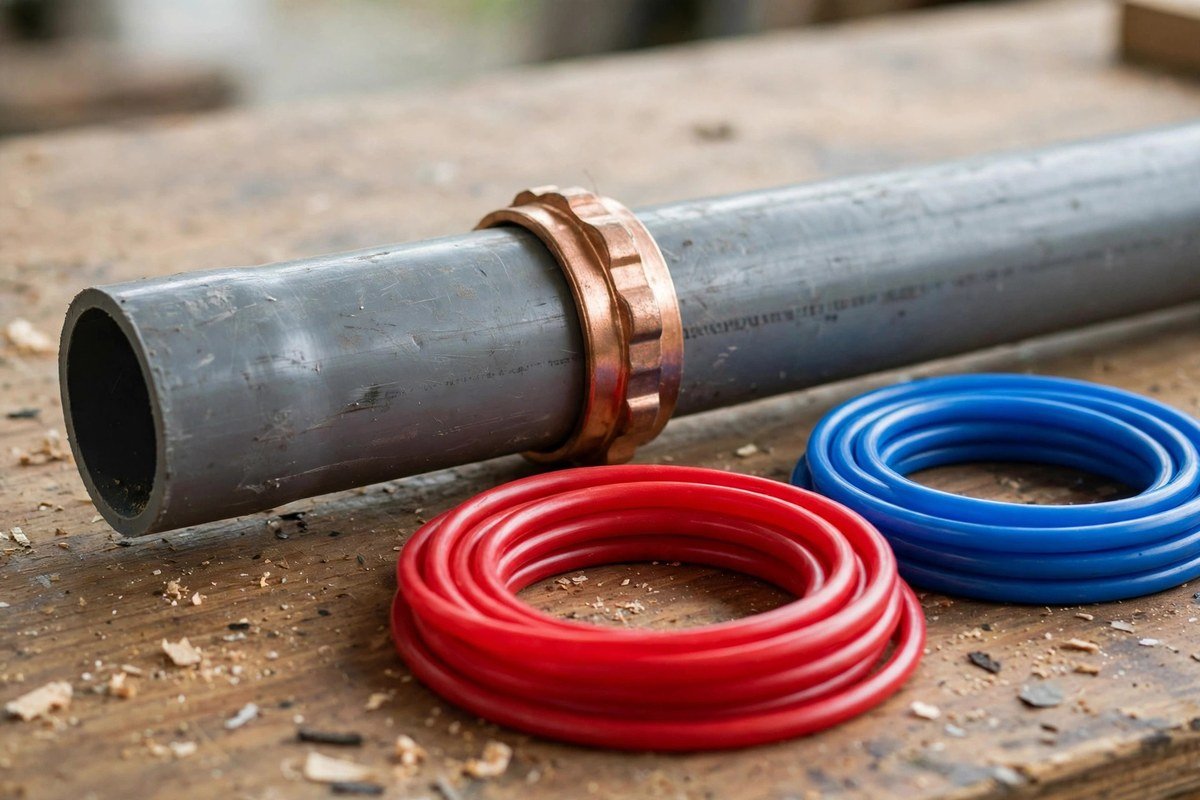
Insurers care because polybutylene, fitted in homes from 1978 to 1995, fails from the inside without much warning. The pipe and its fittings react to chemicals in treated water and grow brittle. It doesn’t always leak politely. It can split, flood a room, and wreck floors and ceilings in one go. That’s why some insurers charge more to cover a polybutylene home, add exclusions, or refuse cover until the pipe is replaced. Thornton’s 1980s and early-90s building wave sits right inside that window, so plenty of mid-city homes still carry it. Check what you actually have (there’s a section on that below), and read our guide to polybutylene pipe replacement in Brighton and the surrounding area. Replacing it before it fails is a planned job on your schedule. Replacing it after is a flood on its schedule.
What does a repipe actually involve?
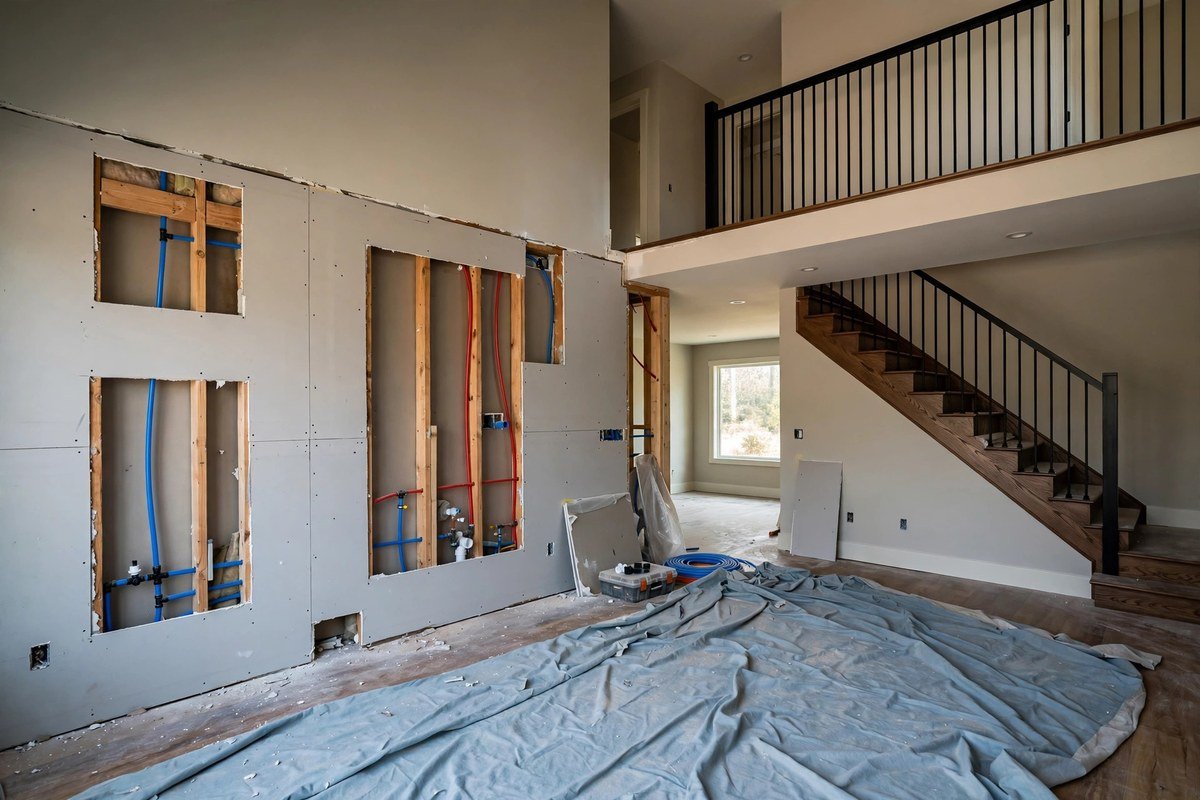
A repipe replaces your home’s water supply lines — the pipes that bring water in — while your drains usually stay put. First, the provider walks the house, maps every run, and agrees with you what gets replaced and what stays. Next, the water goes off and the old lines are cut out or abandoned in place where removal would tear the house apart. New pipe then runs through walls and crawl spaces, with shut-off valves where you’ll want them later. Each fixture gets reconnected, the system gets pressure-tested, and only then do the small wall and ceiling openings get patched. Get the scope in writing before work starts: which lines, which material, who patches. Any number quoted without seeing the house is a guess, and we won’t dress a guess up as a quote.
How long does a repipe take in Thornton?
Most Thornton repipes take days, not weeks. A compact south Thornton ranch with a crawl space gives a crew straight access to most runs, so the work moves fast. A bigger mid-city two-storey takes longer: more bathrooms, longer runs, more wall openings to patch. What stretches a job usually isn’t the pipe work — it’s surprises like a rotten subfloor under a leaking bathroom or access blocked by a finished basement ceiling. Ask for a day-by-day plan before you agree to anything, plus how long the water will be off each day and whether you’ll have one working bathroom overnight.
Can you repipe only part of the house?
Yes, and partial repipes make sense for a lot of Thornton homes. If the leaks cluster in one bathroom, one crawl-space run or the hot-water side only, replacing that section can stop the damage and buy you years. The catch is honesty about what remains. Old galvanised left in place will keep narrowing, and old copper will keep ageing — a partial repipe is a staged plan, not a permanent fix for the untouched sections. Ask the provider to mark, in writing, exactly which lines are new and which are original, so a second stage connects cleanly later. For many homes in 80229 and 80233, staging the work — worst first, rest later — beats putting it off until a burst decides for you.
Will repiping fix low water pressure?
It will, if the pressure loss comes from inside your own pipes — and in older Thornton homes it often does. Galvanised pipe doesn’t just rust; it fills in, until water squeezes through a hole the width of a pencil. New pipe restores the full opening, so the shower upstairs stops dying when someone flushes downstairs. But low pressure has other causes, and repiping won’t cure those: a failing pressure regulator, a partly closed main valve, or a problem on the street side. That’s why diagnosis comes first — pressure tested at an outside tap, then at fixtures inside, then compared. Strong outside and weak inside means the loss sits in your lines. Low at both means save your money and chase the other cause first.
How can you find out what pipes you have?
Start where the water comes in — near the water heater, the main shut-off, or in the crawl space — and look at the pipe itself. Copper is copper-coloured when scratched lightly, hard, and joined with soldered fittings. Galvanised steel is dull grey, heavy and magnetic, with threaded fittings and rust at the joints. Polybutylene is grey, flexible plastic, usually stamped PB, with crimped or plastic fittings. PEX is flexible too but comes in red, blue or white and feels smoother and newer. Check under sinks and behind the washing machine for a second material — many Thornton homes run two or three types after decades of repairs. Still unsure? A provider can identify your lines in minutes during a visit, and that should come before any talk of scope or cost.
What if a pipe bursts while you’re still deciding?
Shut the main water valve off first, open a low tap to drain pressure, and keep water away from electrics — then call. A burst doesn’t cancel your repipe decision; it just jumps the queue. Emergency repair is priced on its own published scale: a burst section repair runs $200–$3,000 with an average around $500, or $150–$250 per linear foot. Emergency call-out runs $100–$300, labour $100–$350/hr, and water cleanup, if you need it, $3–$7.50/sq ft. Those figures cover the burst repair only — your repipe still gets priced after an in-person look, never off a phone guess. Once the section’s fixed, ask the provider to inspect the neighbouring runs while the wall or crawl space is open. For the first-minutes steps, see our emergency burst pipe repair guide, and for Thornton-specific help, our burst pipe repair in Thornton page.
Related guides
- Polybutylene pipe replacement in Brighton — how to spot PB pipe and what replacement involves.
- Burst pipe repair cost guide — the published repair figures and how to read a quote.
- Pipe replacement & repiping — our main repiping service page.
Frequently asked questions
How do I know if my Thornton home needs a full repipe or just a repair?
You need a full repipe when the pipe material itself has worn out, not just one joint. Repeated leaks in different rooms, rusty water at several taps, and pressure that keeps dropping after repairs all point that way. A single leak in sound copper is a repair.
Will a repipe fix the low water pressure in my Thornton home?
Yes, if scale and corrosion inside old galvanised or copper lines are choking the flow. New pipe restores the full inside diameter, so showers and taps usually run stronger. If the problem sits at the street connection or a failing regulator, repiping alone won’t fix it, so get the cause checked first.
Can I repipe only part of my Thornton house?
Yes, and for many Thornton homes that’s the sensible first step. Repiping the worst run first — a leaking bathroom branch or a corroded crawl-space line — stops the active damage and spreads the work out. Get in writing what stays and what goes, so the second stage joins up cleanly later.
How long will a repipe take in a Thornton home?
Most Thornton repipes take days, not weeks. A smaller south Thornton ranch often wraps up faster than a larger mid-city two-storey with longer runs. You’ll get a day-by-day plan before work starts, including when the water goes off and when testing and patching happen.
What should I do if a pipe bursts while I’m still deciding about repiping in Thornton?
Shut the water off at the main valve first, then call (720) 918-0220 for emergency help. A burst section repair runs $200–$3,000 with an average around $500, or $150–$250 per linear foot, plus a $100–$300 call-out. Fix the burst now; decide on the repipe separately.
Ready to stop patching and talk it through? Call (720) 918-0220. We’ll connect you with an independent local provider who can identify your pipes, map your Thornton home, and price the job after seeing it in person. Brighton Burst Pipe is a referral service, not a plumbing company. We connect you with an independent local provider, and you pay the provider directly.